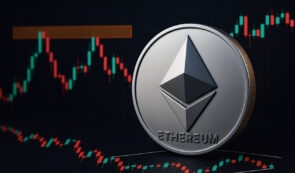
Here’s What’s Really Driving Ethereum’s Market, According to Analysts

Ethereum’s struggles against Bitcoin are once again in the spotlight as new claims surface suggesting that a wave of South Korean retail investment is playing a key role in keeping the asset afloat.

Industry veteran Samson Mow asserted that nearly $6 billion in Korean retail funds are now tied up in so-called “Ethereum treasuries” – firms stockpiling ETH in a strategy modeled after MicroStrategy’s Bitcoin playbook. Mow alleged that local investors, lured by promotional campaigns and influencer tours, are treating these companies as the next big corporate accumulation story, despite weak fundamentals.
ETH continues to lag
Ethereum has dropped nearly 2% in 24 hours and around 5% against Bitcoin over the past month, according to CoinMarketCap. Despite steady inflows and narrative hype, ETH has remained well below its record high near $4,950, and the ETH/BTC ratio continues to slide.
Mow described the current support as “retail-driven rather than institutional,” warning that misplaced enthusiasm could eventually trigger a painful correction. Data from the Strategic ETH Reserve backs the scale of these holdings – about 67 firms collectively control 5.49 million ETH, or roughly 4.5% of total supply, led by entities such as BitMine and SharpLink.
Critics weigh in
Mechanism Capital’s Andrew Kang echoed Mow’s skepticism, arguing that most Ethereum treasury models lack the financial rigor seen in Bitcoin-focused firms. He described ETH’s technical setup as “bearish,” suggesting it may remain range-bound between $1,000 and $4,800 without a catalyst for institutional demand. Kang went further, comparing the hype cycle to XRP’s speculative surges, claiming Ethereum’s valuation is increasingly sustained by “financial illiteracy rather than fundamental strength.”
For now, Ethereum’s narrative remains powerful enough to attract retail inflows, particularly in Asia. But analysts caution that if Bitcoin continues to outperform, the so-called “ETH treasury trade” could become a warning sign – not a bullish case – for the market’s second-largest cryptocurrency.
The information provided in this article is for educational purposes only and does not constitute financial, investment, or trading advice. Coindoo.com does not endorse or recommend any specific investment strategy or cryptocurrency. Always conduct your own research and consult with a licensed financial advisor before making any investment decisions.



Kosta has reported on cryptocurrency markets and blockchain infrastructure since 2020, bringing over six years of hands-on experience in the crypto industry built through daily tracking of markets, trends, and emerging blockchain developments. Specializing in Bitcoin on-chain analysis, institutional ETF flows, and digital asset price action, his work at Coindoo has been cited by other news agencies and consistently covers market developments with a focus on data-driven reporting across Bitcoin, Ethereum, Solana, and XRP. Over the years, Kosta has contributed to multiple crypto media outlets in different regions, authoring over 6,000 articles across the sector. His reporting spans cryptocurrency markets and the broader fintech industry, tracking not only price action but also the technological and regulatory forces shaping the ecosystem. To support his analysis, Kosta actively leverages on-chain data and metrics from leading platforms such as Santiment, Glassnode, and CryptoQuant, enabling deeper, evidence-based market insights. He believes in the power of transparency and the data that underpins the blockchain ecosystem. His academic background in Marketing Management from Denmark further complements his analytical approach, adding a strong understanding of communication strategy and content positioning to his work.