Here Is the Leading Contender to Become the Next Fed Chair

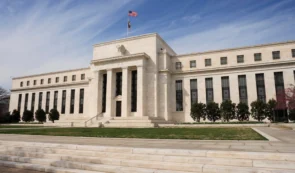
The question surrounding the next Federal Reserve chair is no longer about who has the president’s ear, but who can survive the scrutiny that comes with the job.
As discussions inside Trump’s orbit intensify, the focus has shifted toward a candidate viewed as safer for markets rather than more aligned politically. That shift has quietly elevated former Fed governor Kevin Warsh, while casting uncertainty over Kevin Hassett, who until recently was seen as the natural choice.
Key Takeaways
- The Fed chair race is shifting toward credibility and institutional independence rather than political proximity
- Kevin Warsh is gaining favor as a candidate seen as more acceptable to markets and advisors
- Kevin Hassett’s close ties to the White House are increasingly viewed as a liability rather than an advantage
At the heart of the reshuffle is a concern that has little to do with interest rates themselves. Advisors close to the president are reportedly weighing how the appointment will be interpreted by markets, lawmakers, and global investors.
The Federal Reserve’s credibility rests heavily on its perceived distance from day-to-day politics. Any hint that the central bank could become an extension of the White House risks unsettling bond markets and undermining confidence in monetary policy.
That concern has reframed the decision.
Why Proximity Became a Liability
Hassett’s close working relationship with Trump initially worked in his favor. His willingness to publicly entertain larger rate cuts also aligned with political pressure to stimulate growth.
But that same closeness has become problematic. Internally, doubts have emerged over whether appointing someone so tightly linked to the administration would invite accusations of politicizing the Fed – an outcome few in Washington want to manage during a sensitive economic period.
Rather than strengthening his candidacy, Hassett’s visibility may have exposed its weakness.

Warsh’s Advantage Is Subtle, Not Loud
Warsh’s appeal is less about promises and more about optics. Having previously served inside the Federal Reserve system, he offers familiarity with its culture and constraints without being perceived as a political extension of the current administration.
That balance matters. Warsh is seen as someone who can engage with the president without appearing subordinate to him, a distinction that carries weight when markets are already alert to central bank independence.
Recent impressions appear to have reinforced that view.
Markets Are Reading the Subtext
Investors and traders have begun to recalibrate expectations accordingly. Rather than reacting to formal announcements, markets are responding to signals about institutional comfort and internal consensus.
The rapid shift in sentiment suggests that participants believe the final decision will prioritize stability over alignment. In other words, credibility may now outweigh ideology.
What This Means Going Forward
A Warsh appointment would not necessarily signal a dramatic change in monetary policy direction. Instead, it would likely be interpreted as an attempt to reassure markets that the Fed will remain insulated from political pressure, even under a president known for challenging that norm.
The larger message is that the Fed chair selection has evolved into a referendum on trust. Trust in institutions, trust in independence, and trust that policy decisions will not be dictated by proximity to power.
Right now, the momentum reflects that reality – and it explains why Kevin Warsh is suddenly being viewed not just as an option, but as the safer one.
The information provided in this article is for educational purposes only and does not constitute financial, investment, or trading advice. Coindoo.com does not endorse or recommend any specific investment strategy or cryptocurrency. Always conduct your own research and consult with a licensed financial advisor before making any investment decisions.



Alex is an experienced financial journalist and cryptocurrency enthusiast. With over 8 years of experience covering the crypto, blockchain, and fintech industries, he is well-versed in the complex and ever-evolving world of digital assets. His insightful and thought-provoking articles provide readers with a clear picture of the latest developments and trends in the market. His approach allows him to break down complex ideas into accessible and in-depth content. Follow his publications to stay up to date with the most important trends and topics.