Goldman Sachs Questions AI Boom as Capex Nears Telecom-Bubble Levels
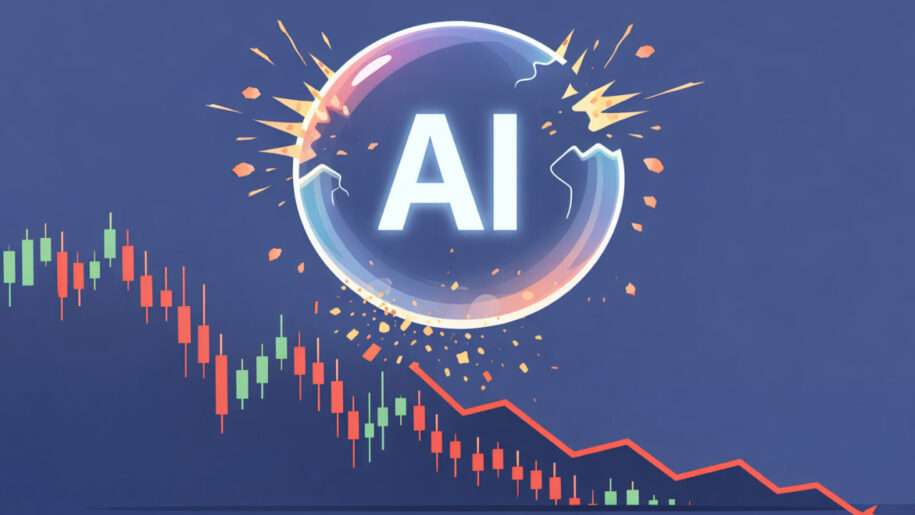
Goldman Sachs has ignited a fresh debate over artificial intelligence after warning that the technology’s near-term economic boost may be far smaller than markets expect.
Key Takeaways
- Goldman says AI’s 2025 GDP impact was near zero due to import-heavy chip spending.
- AI capex is surging past $500B, raising bubble concerns.
- JPM and UBS stay bullish, expecting strong earnings and equity upside.
- The key issue: profits must catch up with infrastructure spending.
In a February 2026 research note, the bank argued that while AI remains a powerful long-term theme, its measurable contribution to U.S. growth in 2025 was close to zero. The statement stands in sharp contrast to the dominant market narrative that positions AI as the primary engine of the next economic expansion.
The “Import Offset” Effect
Goldman’s chief economist explained that the problem lies in how GDP is calculated. The majority of advanced chips and memory modules powering AI systems are produced abroad, particularly by firms like TSMC in Taiwan and major semiconductor suppliers in South Korea.
When U.S. companies invest heavily in imported hardware, those imports subtract from GDP. As a result, enormous AI infrastructure spending does not automatically translate into domestic economic growth. The bank described this dynamic as an “import offset,” effectively neutralizing much of the headline investment boom.
Half a Trillion Dollars – And Rising
The scale of spending remains staggering. Hyperscale cloud giants are projected to pour more than $500 billion into AI infrastructure in 2026, with some estimates approaching $700 billion. Analysts have compared the pace of investment to the peak of the 1990s telecom expansion.
Goldman’s head of stock research has questioned whether AI is solving a problem large enough to justify these costs. Building infrastructure ahead of clear demand, he warned, has historically produced painful corrections.
Markets appear sensitive to that risk. In mid-February, concerns over stretched valuations triggered roughly $1.3 trillion in lost market value across major technology firms in a single week.
Infrastructure Strain and the Rise of “Personal Agents”
Beyond valuation concerns, some analysts expect operational strain. Research firms predict a higher risk of cloud outages this year as capital shifts from legacy systems to GPU-heavy data centers.
Yet even within Goldman, optimism remains about AI’s evolution. The bank’s technology leadership expects 2026 to mark a shift from simple chatbots to autonomous digital “agents” capable of booking travel, managing schedules, and acting more like operating systems than tools.

A Split on Wall Street
Not every major bank shares Goldman’s caution. J.P. Morgan continues to frame AI as a structural supercycle, projecting 13–15% earnings growth for the S&P 500 through 2027 driven by productivity gains.
UBS is even more aggressive, forecasting a 15% rise in global equities by the end of 2026 and encouraging investors to allocate up to 30% of portfolios to structural AI themes.
Goldman’s S&P 500 target stands near 7,600 for 2026, compared with 7,500 from J.P. Morgan and a base-case 7,700 from UBS, which sees a potential bullish stretch toward 8,400.
Monetization vs. Infrastructure
The core disagreement centers on monetization. Goldman argues that the AI rally will only be sustainable if companies eventually generate $1 trillion in annual AI-driven profits – roughly double current consensus expectations.
Still, the firm acknowledges tangible internal benefits. It reports roughly 30% efficiency gains in certain internal processes through AI deployment. Meanwhile, J.P. Morgan highlights revenue improvements from AI-powered analytics, including stronger cross-selling performance.
UBS believes the next phase of the trade could rotate away from chipmakers and toward application-layer software and services as enterprise adoption deepens.
What Happens Next?
Goldman identifies three potential catalysts for a second-half rebound in the AI trade: clearer revenue acceleration in earnings reports, a peak in capital expenditure growth that stabilizes free cash flow, and a broader macro rotation back into secular growth stocks if economic momentum cools.
For now, the divide reflects a larger question confronting global markets: is AI already transforming the real economy, or is Wall Street pricing in a future that has yet to arrive?
The information provided in this article is for educational purposes only and does not constitute financial, investment, or trading advice. Coindoo.com does not endorse or recommend any specific investment strategy or cryptocurrency. Always conduct your own research and consult with a licensed financial advisor before making any investment decisions.



Alex is an experienced financial journalist and cryptocurrency enthusiast. With over 8 years of experience covering the crypto, blockchain, and fintech industries, he is well-versed in the complex and ever-evolving world of digital assets. His insightful and thought-provoking articles provide readers with a clear picture of the latest developments and trends in the market. His approach allows him to break down complex ideas into accessible and in-depth content. Follow his publications to stay up to date with the most important trends and topics.