Global Central Bankers Brace for Possible Market Crash at IMF Meetings
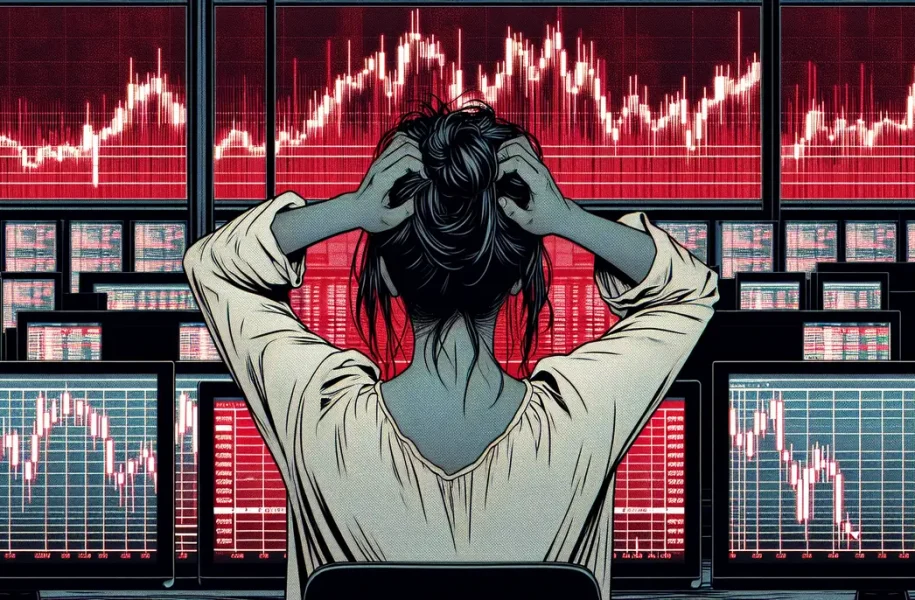
As finance ministers and central bankers head to Washington for the annual IMF and World Bank fall meetings, the tone is more anxious than optimistic.

What was once a routine policy gathering is now shaping up as an emergency forum on the rising risk of a global market correction.
After months of warnings about stretched valuations in AI-driven stocks, world leaders are beginning to publicly acknowledge fears of a potential bubble burst. IMF Managing Director Kristalina Georgieva issued one of the starkest alerts yet, warning that valuations are nearing the extremes seen before the dot-com crash. “If a correction hits, tighter financial conditions could choke global growth,” she said, adding that developing nations would be hardest hit.
The sense of déjà vu is strong. The IMF’s 2000 outlook sounded a similar alarm just before the dot-com collapse forced emergency action by the U.S. Federal Reserve. Two decades later, the same mix of speculative enthusiasm and policy uncertainty appears to be back.
The alarm bells are already ringing across global institutions. The Bank of England warned of a possible “sharp correction,” while the European Central Bank and Reserve Bank of Australia have flagged financial vulnerabilities. The upcoming IMF Global Financial Stability Report, due Tuesday, is expected to take center stage at the meetings, alongside the World Economic Outlook, which will assess the health of the global economy under new trade and fiscal shocks.

Even before Donald Trump’s renewed tariff threats against China rattled investors on Friday, comparisons with past bubbles were gaining traction. The IMF’s message is clear: markets are overheated, liquidity is fragile, and confidence may be more illusion than reality.
Bloomberg Economics noted that while the IMF may be right to sound the alarm, its warnings may fall on deaf ears in a market still gripped by “fear of missing out.”
Beyond the headline risk of a crash, the discussions will extend to trade tensions, inflation trends in Asia, and Europe’s political turmoil, particularly France’s ongoing leadership crisis. In the U.S., attention will shift to Fed Chair Jerome Powell’s remarks on inflation and employment amid the government shutdown that has stalled official data releases.
Across the globe, policymakers are now confronting the same uncomfortable question: has the era of easy money and speculative mania finally reached its breaking point?
Source: Bloomberg
The information provided in this article is for educational purposes only and does not constitute financial, investment, or trading advice. Coindoo.com does not endorse or recommend any specific investment strategy or cryptocurrency. Always conduct your own research and consult with a licensed financial advisor before making any investment decisions.



Kosta joined the team in 2021 and quickly established himself with his thirst for knowledge, incredible dedication, and analytical thinking. He not only covers a wide range of current topics, but also writes excellent reviews, PR articles, and educational materials. His articles are also quoted by other news agencies.