Comparison And Benefits of Top 3 Bridge Aggregators (UPDATED 2026)

Key Takeaways
- Bridge aggregators scan multiple bridges at once to find the cheapest and fastest route
- Jumper Exchange now supports 60+ chains
- Socket remains the go-to infrastructure layer for developers
- Intent-based routing has become the standard in 2026 – you specify what you want, the network figures out how to get there.
- Using an aggregator instead of a single bridge is almost always the smarter move for cost and speed.
Bridge aggregators streamline cross-chain transactions by integrating multiple blockchain bridges, enabling users to find optimal routes based on cost, speed, and security.
We compare the top three bridge aggregators: Socket, Rubic, and Jumper Exchange. We will look at their benefits, features, and unique features.
In 2026, cross-chain bridge aggregators have become essential to multi-chain DeFi. With the rise of new networks like Base, Linea, and Blast, users now demand faster, cheaper, and more secure interoperability. Aggregators such as Socket, Rubic, and Jumper have evolved with integrations into emerging Layer-2 ecosystems and intent-based architectures that simplify routing across dozens of networks.
Socket

Socket is a bridge aggregator known for its modular design and extensive support for cross-chain transfers. It facilitates seamless asset movement across various blockchains and is popular for its user-centric approach and developer-friendly features.
Benefits of Socket
- Modular Infrastructure – Socket’s modular approach allows developers to choose components that best fit their cross-chain needs, making integration into decentralized applications (dApps) flexible and efficient
- Broad Blockchain Support – Socket supports numerous blockchains, enabling users to transfer assets across many networks, which ensures extensive compatibility and user choice.
- Developer Tools – The platform provides robust developer tools and APIs, which help projects easily incorporate cross-chain capabilities, making it attractive for building scalable and adaptable applications.
- Optimal Cross-Chain Transfers – With an intelligent routing algorithm, Socket optimizes cost, speed, and security, enhancing the user experience by providing efficient cross-chain solutions.
2026 Update: Socket continues to be one of the most widely embedded cross-chain routing layers in DeFi, powering integrations inside wallets like MetaMask and OKX Web3. In 2026, its intent-based framework has become a standard feature rather than a novelty, and it remains a go-to tool for developers looking to add cross-chain functionality without building from scratch. Alongside Jumper, it’s consistently cited as one of the aggregators that can beat single-bridge routes by 30–70% on complex paths.
Rubic

Rubic is both a DEX and a bridge aggregator, enabling cross-chain swaps across more than 90 blockchains. It aggregates over 220 DEXs and bridges, making it one of the most extensive platforms in terms of integration.
Benefits of Rubic
- Wide Range of Integrations – Rubic’s extensive integration with hundreds of DEXs and bridges allows for unparalleled flexibility in swapping and bridging assets. This breadth of support ensures users can find the best possible routes for their transactions.
- User-Friendly Interface – Rubic’s platform is designed to be intuitive and easy to use, even for those who may not be deeply familiar with blockchain technology. This accessibility expands the potential user base beyond just technical experts.
- Cost-Effective Solutions – By aggregating multiple routes and options, Rubic enables users to compare and choose the most cost-effective path for their cross-chain transactions. This ensures users can minimize fees and maximize the value of their assets.
- Security and Trust – Rubic has built a reputation as a reliable platform that prioritizes secure cross-chain operations. This trust factor is crucial, especially given the vulnerabilities often associated with bridge technology.
2026 Update: Rubic has recently revamped its cross-chain engine to focus on Layer-2 ecosystems and EVM-compatible networks. Its multi-router system now includes integrations with Base, zkSync, and Linea, and its SDK is widely adopted by DeFi apps for embedded swapping.
Jumper Exchange
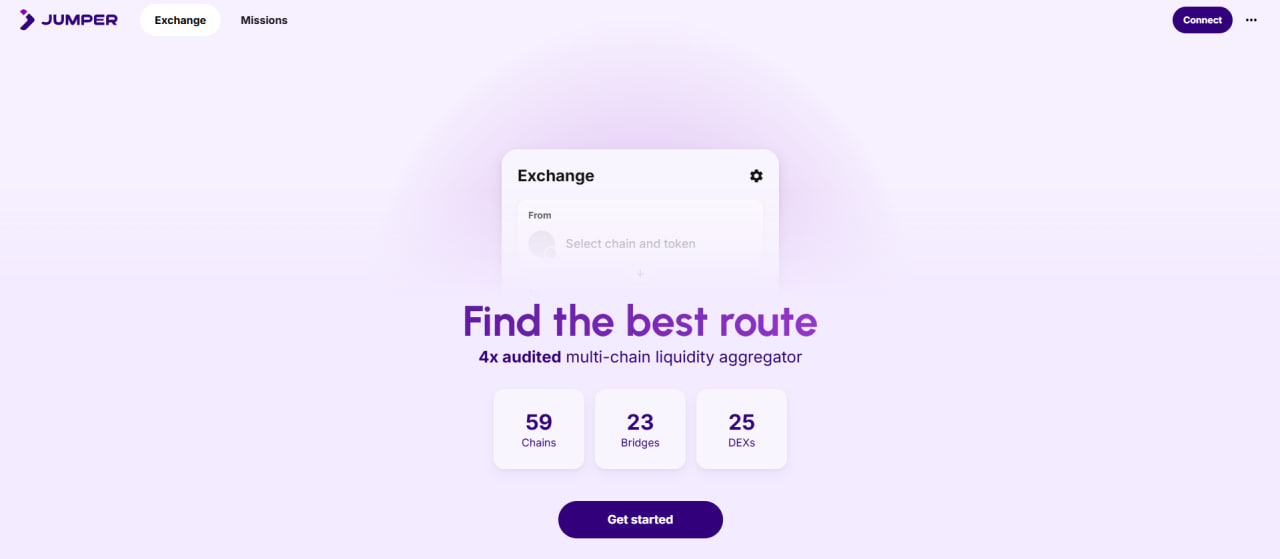
Jumper Exchange is a multi-chain platform that leverages the power of LI.FI to support cross-chain transactions across 17 networks. It’s designed to simplify cross-chain asset transfers, for example, from USDC on Base to SOL on Solana, by finding the most efficient routes and enabling gas refueling on destination chains.
Benefits of Jumper Exchange
- Smart Routing – Jumper Exchange intelligently assesses available bridge options to offer the best route for cross-chain transactions, taking into account factors such as fees, transaction speed, and bridge reliability.
- Gas Refuel Function – One of Jumper Exchange’s most appealing features is the ability to refill gas on the destination chain using assets from the source chain. This addresses a common pain point for users who might find themselves stranded without the necessary gas fees on the destination chain.
- Optimized for Speed – By leveraging LI.FI’s underlying technology, Jumper Exchange, provides fast cross-chain transactions, which benefits users who require timely transfers.
- Comprehensive Support – Jumper now connects over 60 chains, a major expansion from its original 17. Coverage includes all major Ethereum Layer 2s, high-performance Layer 1s like Solana and Avalanche, Cosmos-based networks, and newer platforms like Berachain and Monad.
2026 UPDATE: Jumper has evolved well beyond a simple bridge aggregator. The platform now routes through 20+ bridges and 40+ DEXs, and recently launched Jumper Earn – a product that lets users find and deposit into yield opportunities across 60+ chains in a single transaction, collapsing what used to be a multi-step process into one click. In February 2026 alone, users moved over $1.84 billion through the platform, with whale transactions over $100k making up the majority of volume. Two notable integrations also went live that month: NEAR Intents for intent-based cross-chain swaps, and Garden.fi for seamless Bitcoin connectivity. LI.FI, the infrastructure behind Jumper, has routed nearly $30 billion across 62 chains in cumulative volume.
Conclusion
The future of bridge aggregation has largely arrived. What was a prediction a year ago – intent-based execution, embedded interoperability, automated routing – is now just how things work in 2026. Aggregators don’t just find you a cheaper bridge anymore; platforms like Jumper are moving into yield deployment, portfolio management, and multi-step DeFi execution all from a single interface. The line between “bridge aggregator” and “DeFi command center” is getting harder to draw. For users, that’s a good thing – fewer tabs, fewer steps, fewer mistakes.
FAQ: Bridge Aggregators Explained
1. What is a bridge aggregator?
A bridge aggregator connects multiple blockchain bridges, allowing users to find the fastest, cheapest, and most secure way to move assets across different networks.
2. How is it different from a normal bridge?
While a single bridge links only two blockchains, a bridge aggregator combines many bridges in one platform, automatically selecting the best route for your transaction.
3. Which are the best bridge aggregators in 2026?
Top platforms include Socket, Rubic, and Jumper Exchange. Jumper in particular has grown significantly, now supporting 60+ chains and adding yield features through Jumper Earn, making it one of the most full-featured options available.
4. Are bridge aggregators safe?
They are generally secure when used through official platforms, but users should always verify URLs and avoid unverified bridge links to prevent scams.
5. What’s next for cross-chain technology?
Bridge aggregators are evolving with intent-based routing and broader Layer-2 support, aiming to make moving assets between blockchains faster and nearly effortless.
The information provided in this article is for educational purposes only and does not constitute financial, investment, or trading advice. Coindoo.com does not endorse or recommend any specific investment strategy or cryptocurrency. Always conduct your own research and consult with a licensed financial advisor before making any investment decisions.
Key Takeaways
Bridge aggregators scan multiple bridges at once to find the cheapest and fastest route — often beating single bridges by 30–70% on complex paths.
Jumper Exchange now supports 60+ chains and has expanded beyond bridging into yield deployment with its new Jumper Earn product.
Socket remains the go-to infrastructure layer for developers, powering cross-chain functionality inside wallets like MetaMask and OKX Web3.
Intent-based routing has become the standard in 2026 — you specify what you want, the network figures out how to get there.
Using an aggregator instead of a single bridge is almost always the smarter move for cost and speed.



Alex is an experienced financial journalist and cryptocurrency enthusiast. With over 8 years of experience covering the crypto, blockchain, and fintech industries, he is well-versed in the complex and ever-evolving world of digital assets. His insightful and thought-provoking articles provide readers with a clear picture of the latest developments and trends in the market. His approach allows him to break down complex ideas into accessible and in-depth content. Follow his publications to stay up to date with the most important trends and topics.