Comparison And Benefits of Top 3 Bridge Aggregators (UPDATED 2025)

Bridge aggregators streamline cross-chain transactions by integrating multiple blockchain bridges, enabling users to find optimal routes based on cost, speed, and security.
We compare the top three bridge aggregators: Socket, Rubic, and Jumper Exchange. We will look at their benefits, features, and unique features.
In 2025, cross-chain bridge aggregators have become essential to multi-chain DeFi. With the rise of new networks like Base, Linea, and Blast, users now demand faster, cheaper, and more secure interoperability. Aggregators such as Socket, Rubic, and Jumper have evolved with integrations into emerging Layer-2 ecosystems and intent-based architectures that simplify routing across dozens of networks.
Socket

Socket is a bridge aggregator known for its modular design and extensive support for cross-chain transfers. It facilitates seamless asset movement across various blockchains and is popular for its user-centric approach and developer-friendly features.
Benefits of Socket
- Modular Infrastructure – Socket’s modular approach allows developers to choose components that best fit their cross-chain needs, making integration into decentralized applications (dApps) flexible and efficient
- Broad Blockchain Support – Socket supports numerous blockchains, enabling users to transfer assets across many networks, which ensures extensive compatibility and user choice.
- Developer Tools – The platform provides robust developer tools and APIs, which help projects easily incorporate cross-chain capabilities, making it attractive for building scalable and adaptable applications.
- Optimal Cross-Chain Transfers – With an intelligent routing algorithm, Socket optimizes cost, speed, and security, enhancing the user experience by providing efficient cross-chain solutions.
2025 Update: Socket has expanded to support new intent-based frameworks, allowing users to execute swaps directly from popular DeFi front-ends without leaving their wallet. It also powers integrations for leading aggregators and wallets like MetaMask Snaps and OKX Web3, further cementing its position as a core interoperability layer.
Rubic

Rubic is both a DEX and a bridge aggregator, enabling cross-chain swaps across more than 90 blockchains. It aggregates over 220 DEXs and bridges, making it one of the most extensive platforms in terms of integration.
Benefits of Rubic
- Wide Range of Integrations – Rubic’s extensive integration with hundreds of DEXs and bridges allows for unparalleled flexibility in swapping and bridging assets. This breadth of support ensures users can find the best possible routes for their transactions.
- User-Friendly Interface – Rubic’s platform is designed to be intuitive and easy to use, even for those who may not be deeply familiar with blockchain technology. This accessibility expands the potential user base beyond just technical experts.
- Cost-Effective Solutions – By aggregating multiple routes and options, Rubic enables users to compare and choose the most cost-effective path for their cross-chain transactions. This ensures users can minimize fees and maximize the value of their assets.
- Security and Trust—Rubic has built a reputation as a reliable platform that prioritizes secure cross-chain operations. This trust factor is crucial, especially given the vulnerabilities often associated with bridge technology.
2025 Update: Rubic has recently revamped its cross-chain engine to focus on Layer-2 ecosystems and EVM-compatible networks. Its multi-router system now includes integrations with Base, zkSync, and Linea, and its SDK is widely adopted by DeFi apps for embedded swapping.
Jumper Exchange
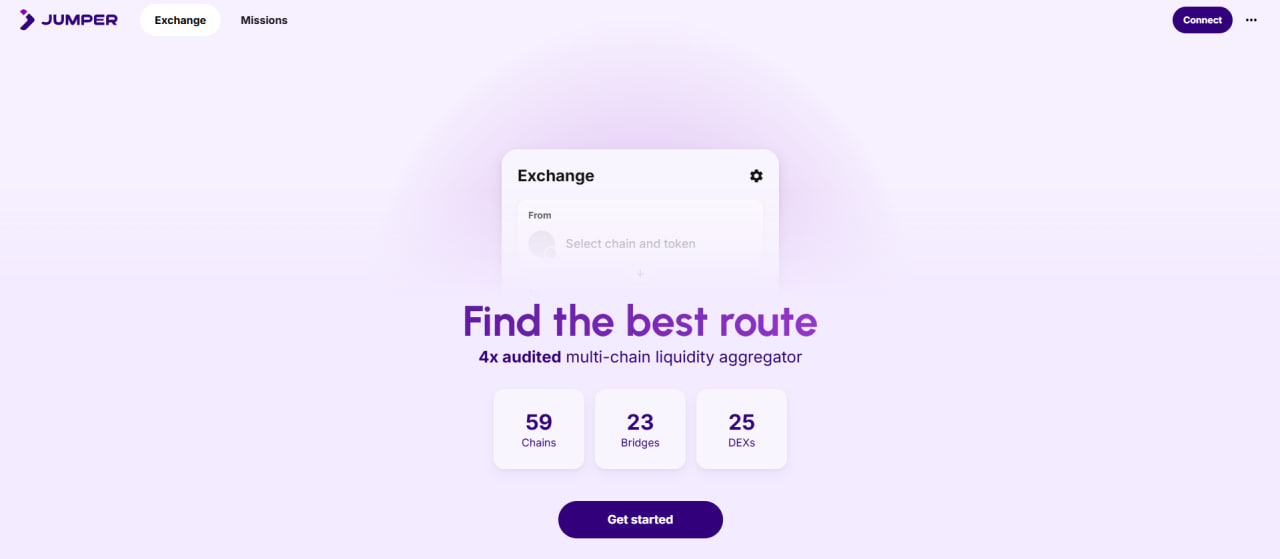
Jumper Exchange is a multi-chain platform that leverages the power of LI.FI to support cross-chain transactions across 17 networks. It’s designed to simplify cross-chain asset transfers, for example, from USDC on Base to SOL on Solana, by finding the most efficient routes and enabling gas refueling on destination chains.
Benefits of Jumper Exchange
- Smart Routing – Jumper Exchange intelligently assesses available bridge options to offer the best route for cross-chain transactions, taking into account factors such as fees, transaction speed, and bridge reliability.
- Gas Refuel Function – One of Jumper Exchange’s most appealing features is the ability to refill gas on the destination chain using assets from the source chain. This addresses a common pain point for users who might find themselves stranded without the necessary gas fees on the destination chain.
- Optimized for Speed – By leveraging LI.FI’s underlying technology, Jumper Exchange, provides fast cross-chain transactions, which benefits users who require timely transfers.
- Comprehensive Support – Though it doesn’t support as many blockchains as Rubic, its 17-network reach is broad enough to cater to most users’ needs while ensuring reliability.
The future of bridge aggregation lies in automation, intent-based execution, and embedded interoperability within wallets and dApps. As the market matures, users are likely to see faster cross-chain settlements with improved transparency and risk management. With innovations like LayerZero, Wormhole Connect, and Chainlink’s CCIP shaping the next wave of interoperability, bridge aggregators such as Socket, Rubic, and Jumper remain key players driving seamless asset movement across the multi-chain world.
FAQ: Bridge Aggregators Explained
1. What is a bridge aggregator?
A bridge aggregator connects multiple blockchain bridges, allowing users to find the fastest, cheapest, and most secure way to move assets across different networks.
2. How is it different from a normal bridge?
While a single bridge links only two blockchains, a bridge aggregator combines many bridges in one platform, automatically selecting the best route for your transaction.
3. Which are the best bridge aggregators in 2025?
Top platforms include Socket, Rubic, and Jumper Exchange, all known for speed, strong integrations, and wide blockchain support.
4. Are bridge aggregators safe?
They are generally secure when used through official platforms, but users should always verify URLs and avoid unverified bridge links to prevent scams.
5. What’s next for cross-chain technology?
Bridge aggregators are evolving with intent-based routing and broader Layer-2 support, aiming to make moving assets between blockchains faster and nearly effortless.