Coinbase Eyes Multi-Fold Growth From USDC Payments Boom
Coinbase’s stablecoin engine is quickly becoming one of the most important profit centers in crypto, just as the broader market enters what many analysts describe as a full-scale infrastructure boom.
Key Takeaways
- Coinbase earned $1.35B from stablecoins in 2025, nearly one-fifth of total revenue.
- The GENIUS Act unlocked regulatory clarity, accelerating institutional USDC adoption.
- Limits on retail rewards could boost Coinbase margins by increasing retained interest income.
- Stablecoin volume hit $33T in 2025, signaling a shift to core financial infrastructure.
In 2025, Coinbase generated approximately $1.35 billion in stablecoin-related revenue, accounting for 19% of its total income. The bulk of that figure stems from its high-margin partnership with Circle, the issuer of USDC. With regulatory clarity now in place in the United States, executives believe that number could multiply between two and seven times if adoption accelerates under the new legal framework.
If USDC adoption in global payments accelerates under the GENIUS Act framework, Coinbase’s stablecoin revenue could increase two to seven times from current levels, turning what is already a $1.35 billion segment into one of the company’s dominant profit engines.
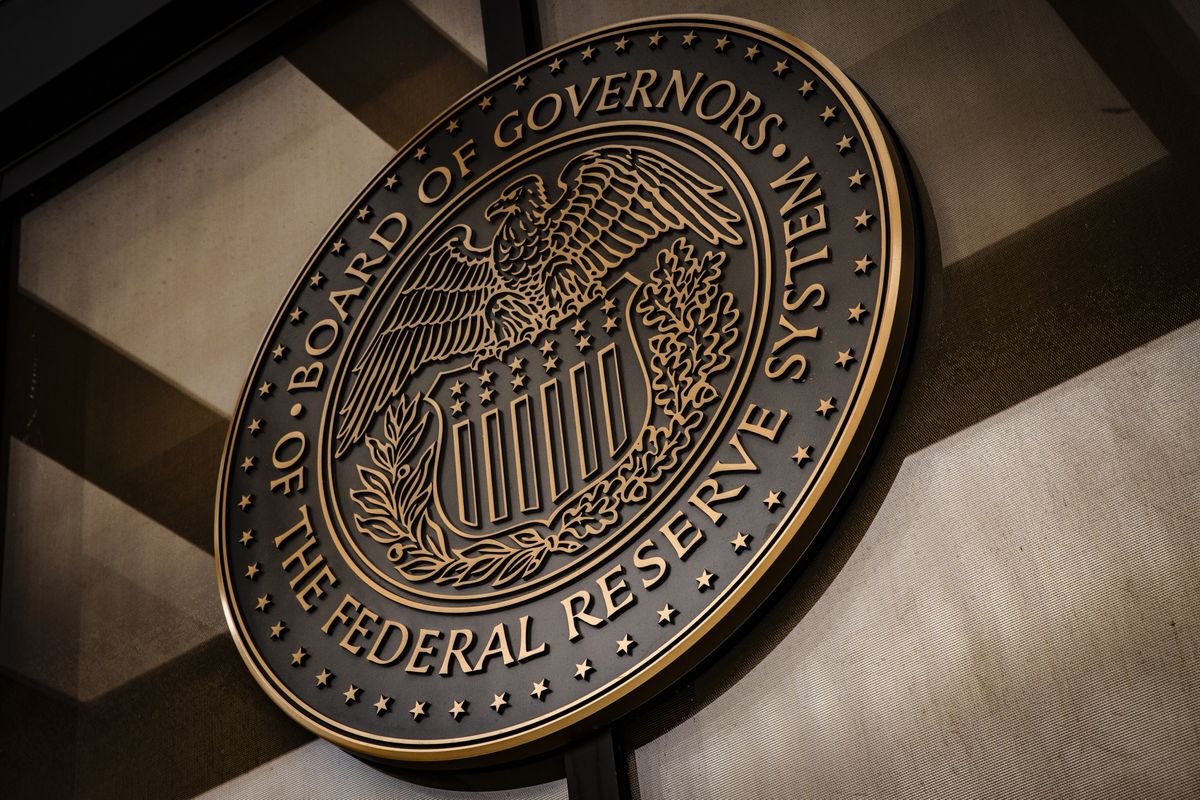
At the center of this transformation is the GENIUS Act, signed into law in July 2025. The legislation established clear guardrails for U.S. dollar-pegged stablecoins, requiring 1:1 backing with high-quality liquid assets such as cash and short-term U.S. Treasuries. It also granted token holders priority claims in the event of insolvency, a move designed to strengthen consumer protection and institutional confidence.
For Coinbase, the law could create an unexpected financial tailwind. Emerging regulatory discussions suggest that exchanges may be restricted from offering yield or rewards to retail stablecoin holders. According to CEO Brian Armstrong, such limits could increase Coinbase’s profitability by allowing the company to retain a larger share of the interest income generated through its Circle revenue-sharing agreement.
Stablecoins Go Mainstream
Beyond Coinbase’s balance sheet, the stablecoin market itself has entered a new phase. Once primarily used for crypto trading, stablecoins are now evolving into core components of global payments infrastructure.
In 2025, total stablecoin transaction volume reached a record $33 trillion, marking a 72% year-over-year surge. Market capitalization climbed to roughly $312 billion by early 2026. Analysts project that figure could approach $1 trillion by late 2026, with longer-term estimates pointing to as much as $2 trillion by 2028.
While Tether (USDT) remains the largest stablecoin by market cap at around $187 billion, USD Coin (USDC) led 2025 in transaction value, processing $18.3 trillion. USDC’s full alignment with the GENIUS Act has positioned it as what many market participants now view as the regulated standard for institutional flows.
From Trading Tool to Financial Rail
A defining shift in 2026 is the move from speculative usage toward real-world settlement. Institutions are increasingly adopting on-chain “atomic settlement,” reducing multi-day delays common in legacy systems such as SWIFT or ACH transfers.
Business-to-business payments now account for roughly 60% of total stablecoin payment volume, reaching $226 billion in 2025. Banks are also experimenting with tokenized deposits – digital representations of traditional bank liabilities – though these instruments often lack the cross-chain interoperability that gives stablecoins a competitive edge.
Another emerging theme is “Agentic Finance,” where AI systems autonomously execute payments and manage treasury operations using stablecoins as their transactional backbone. In this model, stablecoins serve as programmable liquidity for machine-driven commerce, further embedding them into digital infrastructure.
A Structural Revenue Shift for Coinbase
For Coinbase, the implications are significant. Stablecoins are no longer a side business tied to trading cycles; they are becoming recurring, interest-driven revenue streams supported by regulation and institutional adoption.
If USDC supply and transaction activity expand as projected under the GENIUS framework, Coinbase’s stablecoin income could scale dramatically. With nearly one-fifth of its revenue already tied to this segment in 2025, the exchange is increasingly positioned as a financial infrastructure company rather than solely a trading venue.
As regulatory clarity spreads and stablecoins push deeper into payments, treasury management, and AI-driven finance, Coinbase’s early bet on USDC may prove to be one of the most consequential strategic moves in its history.
The information provided in this article is for educational purposes only and does not constitute financial, investment, or trading advice. Coindoo.com does not endorse or recommend any specific investment strategy or cryptocurrency. Always conduct your own research and consult with a licensed financial advisor before making any investment decisions.



Alex is an experienced financial journalist and cryptocurrency enthusiast. With over 8 years of experience covering the crypto, blockchain, and fintech industries, he is well-versed in the complex and ever-evolving world of digital assets. His insightful and thought-provoking articles provide readers with a clear picture of the latest developments and trends in the market. His approach allows him to break down complex ideas into accessible and in-depth content. Follow his publications to stay up to date with the most important trends and topics.