China’s central bank has recently intervened to stabilize the yuan’s value, which has been under significant pressure. With the U.S. trade war intensifying, the People's Bank of China (PBOC) moved to limit excessive currency fluctuations.

China’s central bank has recently intervened to stabilize the yuan’s value, which has been under significant pressure. With the U.S. trade war intensifying, the People's Bank of China (PBOC) moved to limit excessive currency fluctuations.
Amid the intensifying trade conflict with the U.S., China's senior leaders are planning an urgent meeting to strategize ways to stabilize the domestic economy and financial markets.

As trade tensions heat up across global markets, Binance CEO Richard Teng has stepped in to share his perspective on what this shifting landscape could mean for cryptocurrencies.

Peter Schiff, a well-known economist and outspoken critic of Bitcoin, has weighed in on the escalating trade dispute between the U.S. and China.

The European Securities and Markets Authority (ESMA) issued a cautionary statement on Tuesday, highlighting the potential risks the cryptocurrency industry could pose to broader financial stability in the future.

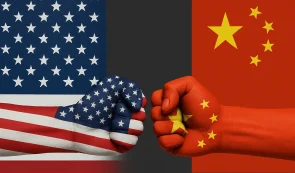
According to couple of sources as of April 8, 2025, at 12:00 PM Eastern Time, the United States has implemented additional tariffs on Chinese imports, increasing the total tariff rate to 104% for certain goods.

Italian Prime Minister Giorgia Meloni is set to visit the United States next week to directly address U.S. President Donald Trump regarding the ongoing trade tariffs.

In a recent exclusive interview with CNN, South Korea's acting president, Han Duck-soo, confirmed that the country will not follow China’s approach of retaliating against the U.S. tariffs imposed in the ongoing trade dispute.

China’s yuan hit its weakest point since 2023 on Tuesday, following a slight easing of the central bank’s control over the currency.

President Donald Trump recently said that "China wants to make a deal, badly, but they don't know how to get it started", according to WatcherGuru.

In a Tuesday interview on CNBC, U.S. Treasury Secretary Scott Bessent called China's decision to escalate tariffs a "big mistake," stating that the move could backfire.
On April 7, 2025, President Donald Trump announced his intention to impose an additional 50% tariff on Chinese imports if China does not withdraw its recently announced 34% retaliatory tariff on U.S. goods by April 8.

It offers developers, crypto enthusiasts, enterprise users, and analysts a unified way to query…

This trend has gained momentum in recent years as companies and even governments explore…

Crypto scams can come in many forms, from fraudulent investment schemes to phishing attacks…

The role of blockchain-based infrastructure in cross-border payments has undergone a dramatic shift in…