The European Central Bank kept policy settings unchanged, opting to leave its deposit facility rate at 2.00% as officials acknowledged easing inflation but warned that the broader outlook remains clouded by global trade and geopolitical risks.

The European Central Bank kept policy settings unchanged, opting to leave its deposit facility rate at 2.00% as officials acknowledged easing inflation but warned that the broader outlook remains clouded by global trade and geopolitical risks.
The Bank of England kept its benchmark interest rate unchanged at 3.75% on Thursday, delivering a closely watched decision that revealed growing internal divisions as policymakers debate when to move next.

The U.S. services sector started 2026 on a strong note, reinforcing its role as the main driver of economic growth.

Japan’s government bond market is showing clear signs of stress just days before the country heads into a snap national election.

Kevin Warsh’s return to the policy spotlight is already rippling through global markets, but the violent reaction seen across precious metals and risk assets may say more about liquidity than a lasting policy regime change.
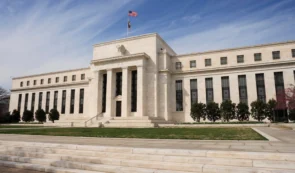
Euro-area banks quietly pulled the brakes on corporate lending at the end of 2025, adding a new layer of uncertainty just as the European Central Bank prepares for its next rate decision.

US manufacturing activity showed a sharp rebound in January, with the ISM Manufacturing Purchasing Managers’ Index rising to 52.6, its highest level in forty months and well above market expectations.
China’s economy entered the new year on shaky footing, adding pressure on policymakers to step up support as weakness at home increasingly overshadows solid export performance.

The Bank of England is widely expected to keep its benchmark interest rate unchanged at 3.75% when it delivers its policy decision on February 5.
India’s crypto market entered 2026 with a familiar reality: heavy taxes, tighter oversight, and no signs of policy relief.

Saudi Arabia closed 2025 with clear economic momentum, driven by a revival in oil output that has once again placed energy at the center of growth, even as fiscal pressures continue to shape government policy.

The first policy meeting of the year at the European Central Bank is unfolding against an unusual backdrop. Instead of inflation shocks or rate-market turmoil, it is the rapid appreciation of the euro that has moved to the center of attention.


It offers developers, crypto enthusiasts, enterprise users, and analysts a unified way to query…

This trend has gained momentum in recent years as companies and even governments explore…

Crypto scams can come in many forms, from fraudulent investment schemes to phishing attacks…

The role of blockchain-based infrastructure in cross-border payments has undergone a dramatic shift in…