Can Bitcoin Everlight Outshine XRP for Low-Cost Transactions?

XRP processes transactions for fractions of a cent, but its model does not include a mechanism for distributing fees to holders. Bitcoin Everlight is built around a different concept: a system where network-generated fees may be linked to participant activity.
This publication is sponsored and written by a third party. Coindoo does not endorse or assume responsibility for the content, accuracy, quality, advertising, products, or any other materials on this page.
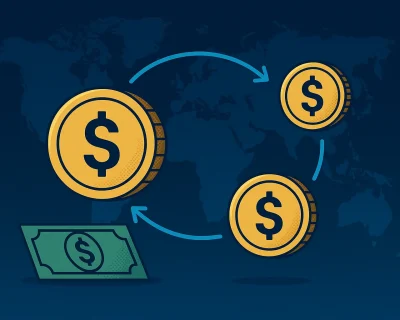
Crypto participants who have been around long enough tend to have a complicated relationship with XRP. The technology genuinely works — transactions settle in 3 to 5 seconds at a cost of around $0.0002, and the network handles up to 1,500 transactions per second. For anyone who has waited 10 minutes and paid a dollar or more for a Bitcoin transfer, those numbers are hard to argue with.
But XRP has always had a structural quirk that gets less attention than it deserves. When a transaction moves through the XRP Ledger, the fee isn’t collected by validators or distributed to anyone — it’s permanently destroyed. The network’s efficiency is real. The rewards for participating in it, from a regular holder’s perspective, are not.
That’s the gap Bitcoin Everlight is designed to fill. Not a faster payment rail — something different entirely: a validation network where the fees generated by transaction activity flow back to participants, denominated in Bitcoin.
A Different Kind of Infrastructure Play
Bitcoin Everlight is a decentralized validation network built to allow users to participate in securing blockchain infrastructure while earning Bitcoin rewards. The platform runs on a Transaction Validation Node framework, and its V2 update introduced Everlight Shards — a simplified participation layer that sits on top of that node infrastructure, removing every technical barrier that would otherwise keep regular users out.
Nobody running a shard needs to operate hardware, configure servers, or understand how validator software works. The infrastructure runs in the background. What users interact with is a single activation step that connects their token holdings to the network’s reward distribution.
Before its presale opened, the project completed dual smart contract audits through Spywolf and Solidproof, and dual KYC verifications through Spywolf and Vital Block — independent verification across both the smart contract and the team’s identity.

From Token to Active Shard in Four Steps
The process is built around simplicity. Users acquire BTCL tokens during the presale — entry begins at $50. Once a user’s holdings reach a tier threshold, their shard activates automatically based on the USD value committed at the time of purchase. From that point, the activated shard participates in the validation infrastructure passively, and the system becomes eligible for reward distribution.
During the presale phase, those rewards are paid in BTCL at a fixed APY tied to whichever tier is active. When mainnet launches, the model transitions to performance-based BTC distribution drawn from real transaction routing fees — the same type of fee activity that XRP destroys rather than distributes.
The Shard Activation Tiers
Bitcoin Everlight offers three tiers during the current presale phase:
- Azure Shard — activates at $500 and represents the entry-level tier for participation in the network’s validation infrastructure
- Violet Shard — activates at $1,500 and is designed as a mid-level participation tier within the system
- Radiant Shard — activates at $3,000 and represents the highest participation tier available during the presale phase
Users holding tokens below a tier threshold remain in a dormant shard state until the required level for activation is reached. Token allocation follows the structure defined by the project’s presale model and is associated with participation in the network infrastructure.

Where the Two Models Differ
XRP is a payment network. It was designed to move value between institutions cheaply and quickly, and it does that well. Ripple has always been explicit about this — the goal was to make Bitcoin adoptable by institutions, optimized for speed and consistency. What it was never designed to do is pay the people holding it a share of network activity. Only 35 validators on the default Unique Node List hold real consensus weight, and even those validators receive nothing — the fees are burned by design.
Beyond the reward mechanics, XRP’s governance model has attracted ongoing scrutiny. Ripple holds influence over roughly 55% of the token supply and plays a significant role in curating the validator list that most nodes follow by default Coinspeaker — a structure that has fuelled a long-running centralization debate in the community.
Bitcoin Everlight approaches network participation from the opposite direction. Fees generated by transaction routing don’t disappear — they’re distributed to active shard holders in BTC.
| Feature | Bitcoin Everlight | XRP |
| Reward participation model | Available at mainnet | No — fees are burned |
| Participation model | Shard activation | Holding only |
| Reward currency | BTC | N/A |
| Network fee destination | Distributed to shards | Permanently destroyed |
| Validator incentives | Yes | No |
| Presale access | Open — Phase 1 now | N/A |
| Audited | Spywolf + Solidproof | N/A |
| KYC verified | Spywolf + Vital Block | N/A |
| Decentralization model | Distributed node network | UNL-based, Ripple influence |

Phase 1 Has Just a Few Days Left
Bitcoin Everlight is currently in Phase 1 of its presale — a phase that runs for 6 days, with 472,500,000 tokens available at $0.0008 per token. This phase represents the current stage of the token distribution process.
XRP holders who have sat on the network for years without direct participation in fee distribution from their participation are a natural audience for what Bitcoin Everlight is offering. The underlying concept — that a validation network should pay the people who back it — is straightforward. The execution, between dual audits, verified identity, and a shard activation model that aims to simplify participation requirements, has been built to match.
Users interested in learning more about how Everlight Shards work and what the BTC reward distribution looks like can explore the platform here:
https://bitcoineverlight.com/btc-market
This publication is sponsored and written by a third party. Coindoo does not endorse or assume responsibility for the content, accuracy, quality, advertising, products, or any other materials on this page. Readers are encouraged to conduct their own research before engaging in any cryptocurrency-related actions. Coindoo will not be liable, directly or indirectly, for any damages or losses resulting from the use of or reliance on any content, goods, or services mentioned.


Krasimir Rusev is a journalist with many years of experience in covering cryptocurrencies and financial markets. He specializes in analysis, news, and forecasts for digital assets, providing readers with in-depth and reliable information on the latest market trends. His expertise and professionalism make him a valuable source of information for investors, traders, and anyone who follows the dynamics of the crypto world.