BRICS: Gold Buying Spree Signals Strategic Shift in Global Finance
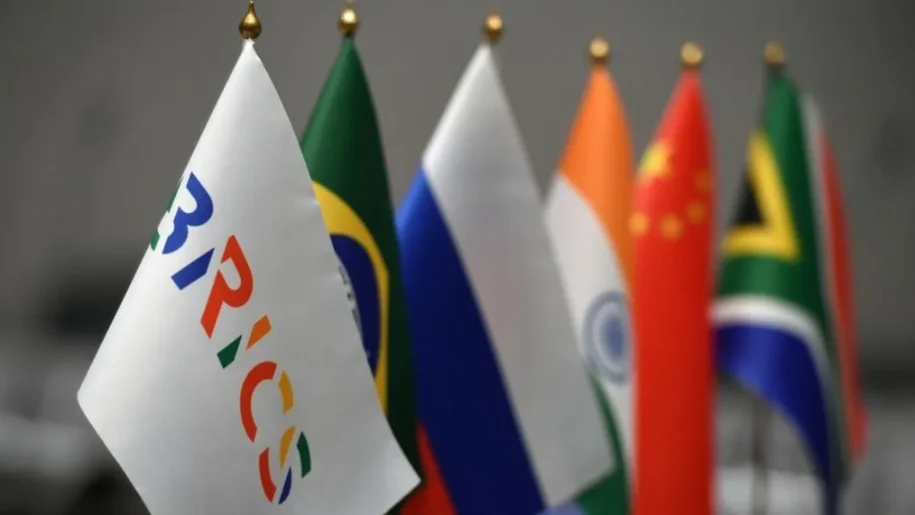
Across the BRICS bloc, central banks are quietly reshaping their balance sheets in a way that signals long-term intent rather than short-term caution.
Over the first three quarters of 2025, these countries accumulated hundreds of tonnes of gold, continuing to buy even as prices surged to historic extremes. That decision alone separates this cycle from typical reserve management behavior. Central banks usually wait for pullbacks. BRICS did not.
- BRICS central banks are buying gold aggressively, even at record prices.
- The move signals a strategic shift away from dollar-heavy reserves.
- Gold is re-emerging as a tool of monetary sovereignty amid geopolitical risk.
The significance of the recent gold purchases is not the quantity alone, but the timing. Gold prices were already elevated when buying accelerated, yet demand did not slow. That behavior suggests the purchases are strategic rather than opportunistic.
According to World Gold Council data, BRICS members added more than 660 tonnes of gold in nine months, committing roughly $91 billion. This was not a hedge against a single risk event – it was a deliberate repositioning of reserves.
Gold, in this context, is being treated less like a commodity and more like a geopolitical asset.
From Dollar Exposure to Physical Reserves
For decades, US dollar assets formed the backbone of reserves across emerging economies. That structure is now being quietly diluted. Gold offers something paper assets cannot: immunity from sanctions, independence from payment systems, and zero counterparty risk.
BRICS central banks appear to be prioritizing those characteristics over yield or liquidity. The goal is not to replace the dollar overnight, but to reduce vulnerability to external financial pressure.
This shift gained momentum after sanctions on Russia exposed how quickly access to reserves could be restricted. Since then, gold accumulation has become a consistent feature of BRICS reserve policy.
Who Is Leading the Accumulation
Within the alliance, the strategy is not evenly distributed. Russia and China account for the bulk of holdings, each sitting on more than 2,000 tonnes. India maintains a sizable but more conservative position, while Brazil remains a minor holder despite recent additions.
In total, BRICS countries now control just over 6,000 tonnes of gold. That figure still trails the United States, which remains the single largest holder globally, but the gap has narrowed meaningfully over time.
The contrast is notable: while advanced economies already sit on large legacy reserves, BRICS countries are actively building theirs.
Gold’s Return to the Monetary Conversation
Beyond reserve diversification, gold is increasingly discussed as a foundation for future financial arrangements. While no formal framework has been announced, speculation persists that physical gold could underpin settlement mechanisms or regional units of account designed to reduce reliance on Western systems.
Whether such plans materialize is secondary. The behavior itself sends a signal: trust is being shifted toward assets that exist outside political reach.
What This Really Means
The dollar is not collapsing, and BRICS is not abandoning the global financial system. But the direction is unmistakable. Gold is being restored as a core pillar of monetary sovereignty.
This is not a trade. It is a long-term bet on a more fragmented, multipolar financial world – one where power is backed not only by policy, but by metal held in vaults.
Gold hasn’t replaced the dollar. But it has clearly reclaimed its seat at the table.
The information provided in this article is for educational purposes only and does not constitute financial, investment, or trading advice. Coindoo.com does not endorse or recommend any specific investment strategy or cryptocurrency. Always conduct your own research and consult with a licensed financial advisor before making any investment decisions.



Alex is an experienced financial journalist and cryptocurrency enthusiast. With over 8 years of experience covering the crypto, blockchain, and fintech industries, he is well-versed in the complex and ever-evolving world of digital assets. His insightful and thought-provoking articles provide readers with a clear picture of the latest developments and trends in the market. His approach allows him to break down complex ideas into accessible and in-depth content. Follow his publications to stay up to date with the most important trends and topics.