BoE Warns the AI Boom Could Trigger a Debt Crisis
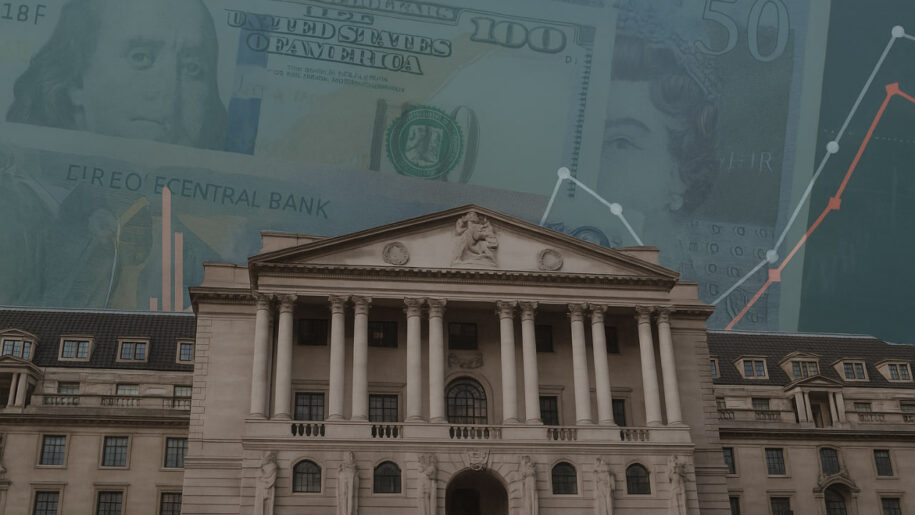
The global race to dominate artificial intelligence has become so intense that the financial system itself may now be exposed to it.
Key Takeaways:
- AI infrastructure spending is increasingly debt-financed, not cash-funded.
- A correction in AI valuations could trigger tightening across global credit markets.
- Oracle’s CDS surge is becoming a leading indicator of stress in AI-related borrowing.
That is the message from the Bank of England, which says the world’s biggest companies are pouring money into AI infrastructure at a pace that markets have rarely seen before — and much of that spending is increasingly being funded by borrowed money.
What makes the situation risky, according to the central bank, has little to do with whether AI technology succeeds. The danger is that the financial structure powering the boom is fragile. Sky-high valuations and record levels of corporate leverage are beginning to move in tandem, and historically that combination has been a warning sign before major market corrections.
The Debt Behind the Hype
A handful of tech giants initially fueled the AI build-out using internal cash, but that phase is already fading. The Bank of England now estimates that nearly half of the $5 trillion expected to be poured into AI infrastructure over the next five years will come from external financing, particularly through debt markets.
That means the sector’s future doesn’t just depend on innovation — it depends on creditors remaining confident.
The central bank highlighted early tremors: credit default swaps tied to firms aggressively borrowing for AI expansion are widening much faster than normal. Investors appear to be pricing in the risk that some companies may struggle to service the debt if market enthusiasm cools.
What Happens If AI Stocks Lose Momentum
The Bank of England’s concern is not simply about tech stocks falling. If valuations snap lower, it could trigger a broad tightening of credit conditions across sectors. Household wealth would likely decline, consumer spending could contract, and lenders might pull back — not only from AI-focused companies but from corporate borrowers more generally. A chain reaction of this kind would represent a financial stability problem, not an isolated technology correction.
The warning lands at a moment when comparisons to the dot-com bubble are growing louder. The valuations of AI-linked companies have soared, and competition to secure computing power and data-center capacity has become intense. But unlike internet stocks from the early 2000s, most AI players today generate real earnings — a point emphasized by Governor Andrew Bailey, who stressed that the industry is not running purely on hope, even if not all companies will survive.

A New Risk Indicator: Oracle
Investors have quietly started using Oracle as a proxy to test sentiment in the AI debt trade. The company’s borrowing this year to fund massive infrastructure spending pushed its CDS spreads sharply higher — tripling since July — even as investment-grade spreads across the U.S. stayed largely unchanged. Traders are effectively betting that if the AI credit cycle rolls over, Oracle will signal the stress first.
The Irony: AI Is Powering the Expansion It Could Threaten
The Bank of England’s report acknowledges that artificial intelligence has been a major driver of global market strength. This year alone, AI is estimated to account for two-thirds of S&P 500 gains and almost half of U.S. GDP growth in the first half of 2025. Nvidia sits at the center of it all, with multi-billion-dollar deals locking hyperscalers, cloud firms and chip designers into an increasingly interdependent system.
The risk is that the very network AI has created — commercially and financially — could become a vulnerability if confidence disappears. AI does not need to fail for markets to break; valuations simply need to fall.
The information provided in this article is for educational purposes only and does not constitute financial, investment, or trading advice. Coindoo.com does not endorse or recommend any specific investment strategy or cryptocurrency. Always conduct your own research and consult with a licensed financial advisor before making any investment decisions.



Alexander Zdravkov is a person who always looks for the logic behind things. He has more than 3 years of experience in the crypto space, where he skillfully identifies new trends in the world of digital currencies. Whether providing in-depth analysis or daily reports on all topics, his deep understanding and enthusiasm for what he does make him a valuable member of the team.