Bitcoin vs. Gold: Changpeng Zhao and Peter Schiff Debate the Future of Money
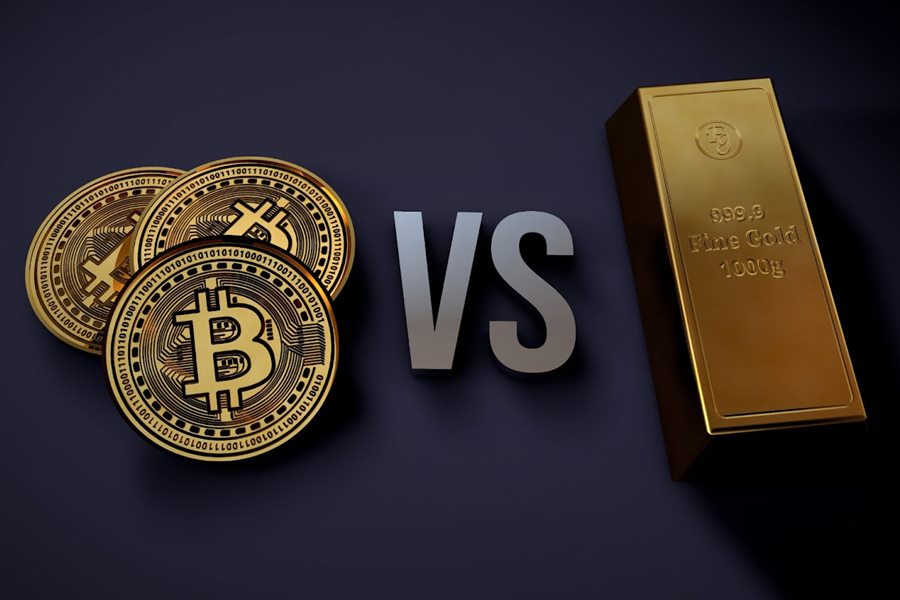
The long-awaited debate between Binance founder Changpeng “CZ” Zhao and economist Peter Schiff finally took place, bringing together two very different interpretations of what it means for an asset to have value.
- CZ argues Bitcoin outperforms gold in transparency, accessibility, and long-term returns.
- Schiff maintains that gold’s physical qualities and industrial demand give it enduring value.
- BTC has historically beaten gold over multi-year periods, though gold leads in 2025.
What emerged was not only a comparison between Bitcoin and gold, but a broader argument about how money and utility should be defined in a rapidly changing global financial environment. Their discussion moved beyond price charts and into the philosophical foundations underpinning each asset.
Verifiability and Transparency Take the Spotlight
CZ opened the debate by emphasizing one of Bitcoin’s strongest functional advantages: its ability to be verified instantly. Using a simple demonstration, he handed Schiff a gold bar and asked him to confirm its authenticity on the spot. Schiff hesitated, unable to determine whether it was genuine without specialized equipment. CZ contrasted this with Bitcoin, whose transactions and balances can be verified globally in seconds through public blockchain data, without reliance on vaults or intermediaries. In CZ’s view, this level of transparency elevates Bitcoin beyond a speculative instrument and positions it as a reliable digital settlement network.
Schiff’s Defense of Physical Assets and Industrial Value
Schiff countered by shifting the conversation toward real-world usefulness. He acknowledged Bitcoin’s transparency but argued that verifiability alone does not grant an asset intrinsic value. Gold, he said, earns its place in the global economy because it is physically demanded by manufacturing, electronics, and other industrial sectors. By contrast, he described Bitcoin as “nothing” because its existence is entirely digital and dependent on networks, sentiment, and speculation. For Schiff, scarcity imposed by nature is fundamentally more credible than scarcity coded into software.
Debate Extends to Utility and Everyday Usage
CZ pushed back by comparing the practical use of both assets. He argued that gold is rarely used in everyday transactions, while Bitcoin has already become spendable through payment cards, online services, P2P systems, and global transfer platforms. The consumer experience, he claimed, is now simple enough that users do not need to understand the technical architecture behind a Bitcoin payment for it to function. Schiff disagreed, insisting that Bitcoin transactions rely on intermediaries and are not as seamless as they appear, but CZ maintained that what happens behind the scenes is irrelevant as long as payments reach their destination.
Performance Figures Paint a Split Narrative
When the debate turned to long-term returns, both sides found data that supported their positions. Schiff highlighted that gold has outperformed Bitcoin over the past four years and that 2025 has been particularly strong for the metal, which is up roughly 59% year-to-date. Bitcoin, on the other hand, fell below $100,000 in November and remains negative for the year. CZ responded by looking at broader timeframes, pointing out that over the last eight years, Bitcoin has significantly outpaced gold. Independent TradingView data confirms that over the past five years, Bitcoin has surged 377% while gold has gained 127%, reinforcing CZ’s argument that Bitcoin continues to dominate in longer cycles.
Two Assets, Two Ideologies, One Enduring Debate
By the end of the discussion, it became clear that the clash between CZ and Schiff stems from fundamentally different visions of value. Schiff believes meaningful assets must have physical presence and industrial demand, while CZ sees monetary systems increasingly shaped by digital networks, verifiable ownership, and programmable scarcity. Their debate underscored that Bitcoin and gold are not simply competing assets, but symbols of two opposing philosophies — one rooted in centuries-old views of wealth, the other designed for a decentralized digital world.
The information provided in this article is for educational purposes only and does not constitute financial, investment, or trading advice. Coindoo.com does not endorse or recommend any specific investment strategy or cryptocurrency. Always conduct your own research and consult with a licensed financial advisor before making any investment decisions.



Kosta joined the team in 2021 and quickly established himself with his thirst for knowledge, incredible dedication, and analytical thinking. He not only covers a wide range of current topics, but also writes excellent reviews, PR articles, and educational materials. His articles are also quoted by other news agencies.