

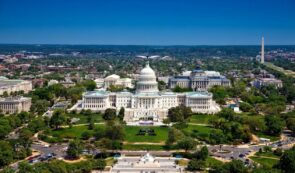
Washington may promote private dollar stablecoins abroad, but no issuer, country, funding or formal program has been announced.

Journalist


Kosta has reported on cryptocurrency markets and blockchain infrastructure since 2020, bringing over six years of hands-on experience in the crypto industry built through daily tracking of markets, trends, and emerging blockchain developments. Specializing in Bitcoin on-chain analysis, institutional ETF flows, and digital asset price action, his work at Coindoo has been cited by other news agencies and consistently covers market developments with a focus on data-driven reporting across Bitcoin, Ethereum, Solana, and XRP. Over the years, Kosta has contributed to multiple crypto media outlets in different regions, authoring over 6,000 articles across the sector. His reporting spans cryptocurrency markets and the broader fintech industry, tracking not only price action but also the technological and regulatory forces shaping the ecosystem. To support his analysis, Kosta actively leverages on-chain data and metrics from leading platforms such as Santiment, Glassnode, and CryptoQuant, enabling deeper, evidence-based market insights. He believes in the power of transparency and the data that underpins the blockchain ecosystem. His academic background in Marketing Management from Denmark further complements his analytical approach, adding a strong understanding of communication strategy and content positioning to his work.
Washington may promote private dollar stablecoins abroad, but no issuer, country, funding or formal program has been announced.
Crypto absorbed a failed US regulatory vote and two central-bank rate increases before Bitcoin reached $87,374. The retreat began as oil rebounded, Treasury yields rose and traders had substantial monthly gains available to protect.

BlackRock’s latest digital-assets paper argues that AI agents could create new stablecoin demand by paying continuously for data, software and computing power without human checkout flows.
BitMEX ended all trading services at 04:00 UTC on September 23, closing an exchange that spent more than 11 years shaping the crypto derivatives market.

Solana’s Alpenglow upgrade targets finality in roughly 150 milliseconds. Anza’s newly updated rollout tracker, however, shows that its public testnet activation is still pending.

Canada’s six largest banks are exploring how tokenized CAD deposits could move between institutions. Creating digital claims is only the first step; settling them is harder.

The White House says US regulators will continue advancing crypto policy after the CLARITY Act failed, shifting the immediate work from Congress to the SEC and CFTC.
Opening a long and a short at the same time looks like a way to profit whichever direction crypto moves. The numbers produce a different result.

Cardano’s x402 support is more than a design sketch: working software has completed an end-to-end payment on the network’s pre-production chain.

US prosecutors are reportedly examining whether Binance knowingly allowed prohibited Iran-linked trading, putting the exchange’s post-2023 compliance overhaul under fresh scrutiny.

X has added a trade button to Bitcoin and stock cashtags for eligible US users. The feature begins on X, but the order is completed through a separate financial platform.

New vacancies show Apple assessing tokenized payment options and Google expanding its institutional blockchain expertise. They reveal two different business interests, not coordinated stablecoin launches.
