Analyzing WEEX Exchange: Markets, Liquidity, and Transparency

WEEX is a centralized crypto exchange established in 2018, headquartered in Singapore.
Introduction
This report provides a comprehensive analysis of WEEX’s trading environment, focusing on the following key areas:
-
Liquidity Depth: Assessment of market depth for major trading pairs on futures markets.
-
Asset Diversity: Evaluation of the variety and number of assets listed on the platform.
-
Comparative Analysis: Benchmarking WEEX against other leading cryptocurrency exchanges in terms of liquidity, asset offerings.
For the analysis of markets, we selected the 10 most actively traded coins and tokens. The assets are grouped into:
-
Majors: BTC, ETH, XRP, SOL, ADA
-
DeFi/Infra: AAVE, LINK, UNI
-
Memes: DOGE, SHIB
For the futures market, the analysis focuses on top-of-book liquidity (±0.1%), assessing the available volume at the best bid and ask prices. This approach provides a more accurate representation of immediate execution liquidity in the futures market. The data snapshot took place in May 2025.
Markets Analysis
Liquidity Depth and Slippage Analysis on Futures Markets
WEEX’s futures markets demonstrate varied liquidity conditions across major and mid-cap assets. Using ±2% depth and spread as proxies for execution quality, the analysis reveals that only a handful of contracts exhibit deep enough order books to reliably handle large trades with minimal slippage.
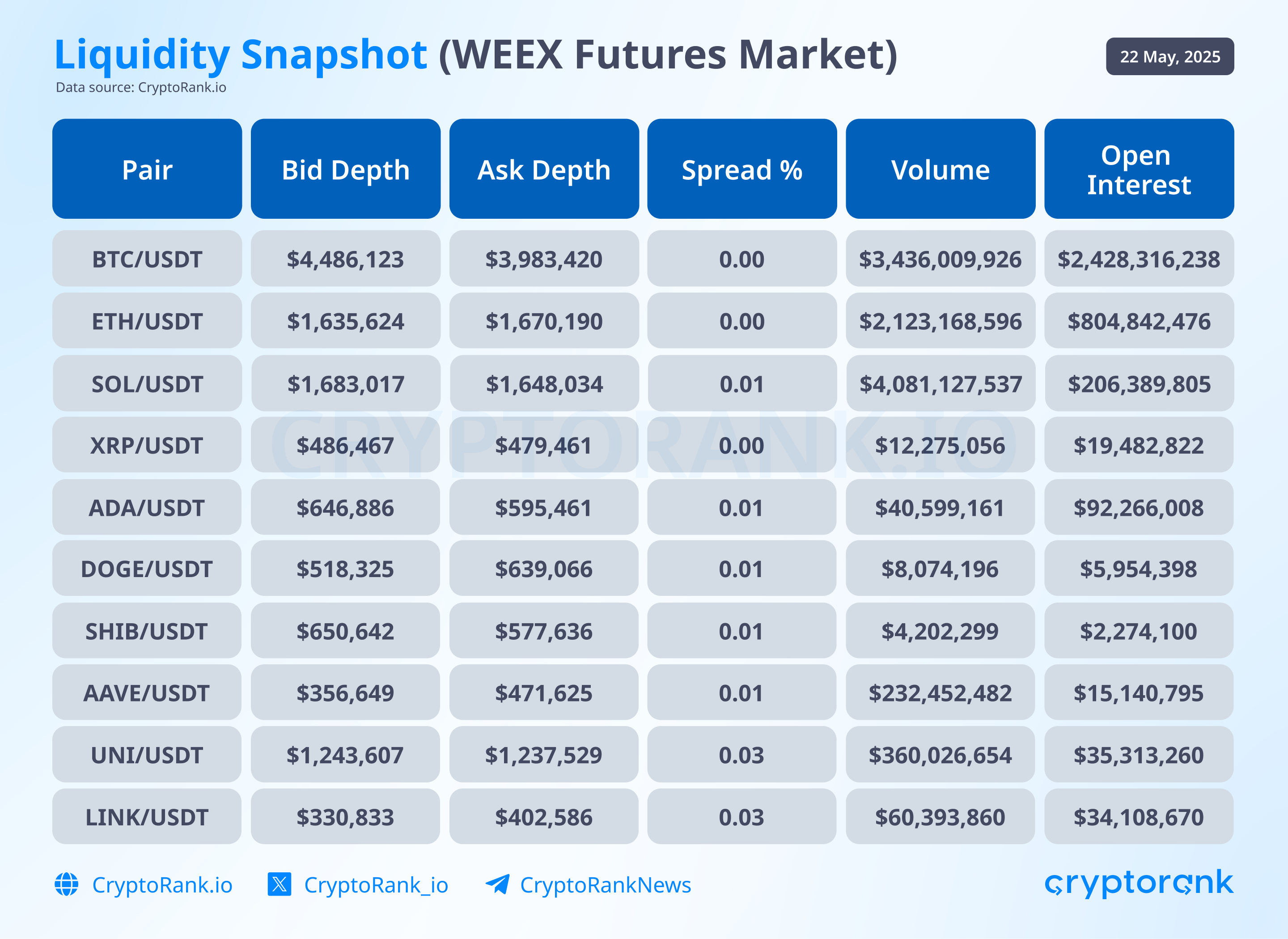
BTC/USDT remains the most liquid futures pair, with a +2% depth of $4.49M and -2% depth of $3.98M, and a zero spread, which is ideal for large and frequent execution. ETH/USDT also shows solid liquidity, with approximately $1.6M on each side of the book, offering high availability for both retail and institutional traders. SOL/USDT performs similarly, maintaining tight spreads and order book depth exceeding $1.6M, indicating an active derivatives market.
UNI/USDT stands out with depth over $1.2M on each side and a moderate spread of 0.03%, suggesting stable market-making activity. Other pairs like DOGE/USDT, ADA/USDT, and SHIB/USDT maintain depth between $500k and $650k, with spreads holding around 0.01%, making them viable for moderate trading volume but vulnerable to slippage on larger orders.
Contracts such as AAVE/USDT, LINK/USDT, and XRP/USDT display more limited depth, ranging from $330k to $486k, with higher spreads (0.03% for LINK and UNI). These markets are better suited for smaller trades, as larger orders may lead to visible price movement.
Analyzing the Open Interest (OI) relative to trading volume, pairs like BTC/USDT and ETH/USDT indicate a healthy balance, suggesting sustainable liquidity and moderate speculative activity. XRP/USDT’s high OI compared to its lower volume points to increased speculative positioning, possibly raising volatility risks.
Overall, WEEX provides high execution quality for top-traded assets like BTC, ETH, and SOL, while offering access to a wide range of altcoin derivatives with moderate to low liquidity. Traders should account for depth limitations and spread sensitivity when planning trade size and strategy across less liquid pairs.
Number of Listed Assets and Presence of Long-tail or Early-listed Tokens.
The number of futures trading pairs on WEEX exceeds 700. This highlights the dynamic nature of WEEX’s futures offerings, which may appeal to traders seeking diverse derivative instruments. In the last month, WEEX introduced 39 new futures trading pairs.
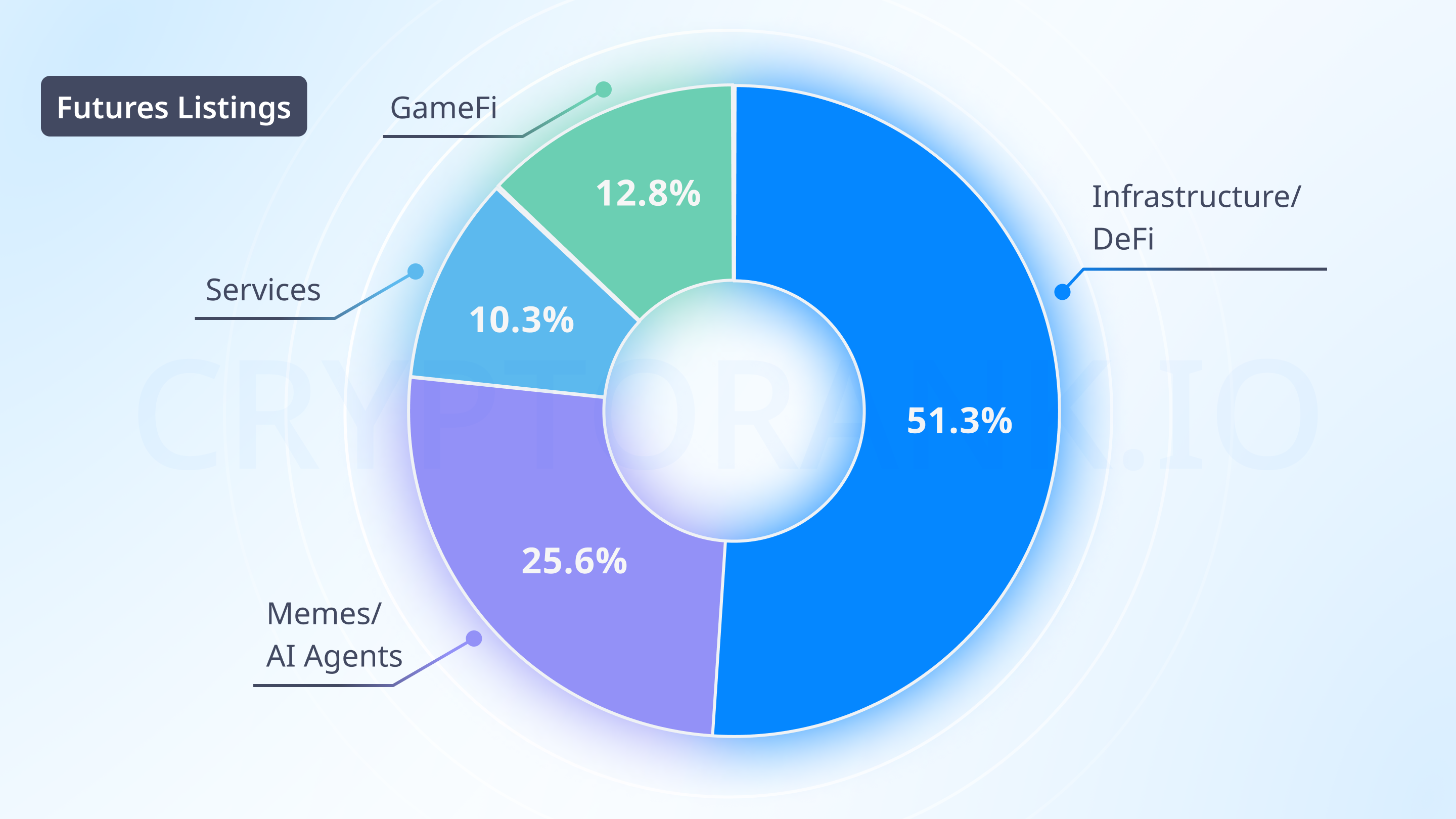
The futures market prioritizes infrastructure and DeFi tokens (51.3% of new pairs), suggesting a focus on assets with stronger fundamentals or market stability, suitable for leveraged trading. The lower proportion of meme and AI agent tokens (25.6%) in futures indicates a more selective approach, likely to ensure liquidity and reduce risk in derivatives. The presence of GameFi (12.8%) and service-oriented tokens (10.3%) in futures further diversifies offerings, tapping into emerging trends like blockchain gaming.
The high volume of new listings (39 futures pairs in one month) underscores WEEX’s agility in responding to market trends. The emphasis on long-tail tokens in the spot market and early-listed projects across both markets, supported by the WE-Launch program, positions WEEX as a platform for discovering undervalued or emerging assets, appealing to a broad spectrum of traders.
WEEX demonstrates a notable presence of long-tail and early-listed tokens, enhancing its appeal for niche and emerging market traders. Long-tail tokens, defined as less popular or niche cryptocurrencies, are evident from recent listings on WEEX’s new token announcements page, such as PUSSFi (PUSS), FARTGIRL, and 42069COIN, listed in April 2025. These tokens, often meme coins or projects with smaller market caps, are typically not widely traded on major exchanges, fitting the long-tail category.
Early-listed tokens, those listed shortly after launch, are supported through WEEX’s WE-Launch program, which focuses on airdrops for early-stage crypto projects. The WE-Launch page details historical projects. The program’s structure, requiring WXT staking for airdrops, further underscores WEEX’s strategy to engage with emerging projects, likely attracting traders interested in growth opportunities.
In summary, WEEX lists around 700 for futures trading, with potential updates suggesting higher futures figures. The exchange actively supports long-tail and early-listed tokens, as evidenced by recent listings and the WE-Launch program, catering to a broad spectrum of trading preferences.
Comparison with Other Exchanges
When WEEX is evaluated against other cryptocurrency exchanges, such as Bitunix, CoinW, BloFin, BTCC, Bybit, Bitget, in futures markets, several distinct patterns emerge regarding liquidity depth, execution quality, and asset coverage.
In the futures segment, WEEX offers more than 700 contracts, the largest among the compared platforms. This includes not only high-cap assets but also speculative tokens, AI-themed coins, and meme derivatives. Most competitors support 300–550 pairs, placing WEEX ahead in market exposure and product variety.
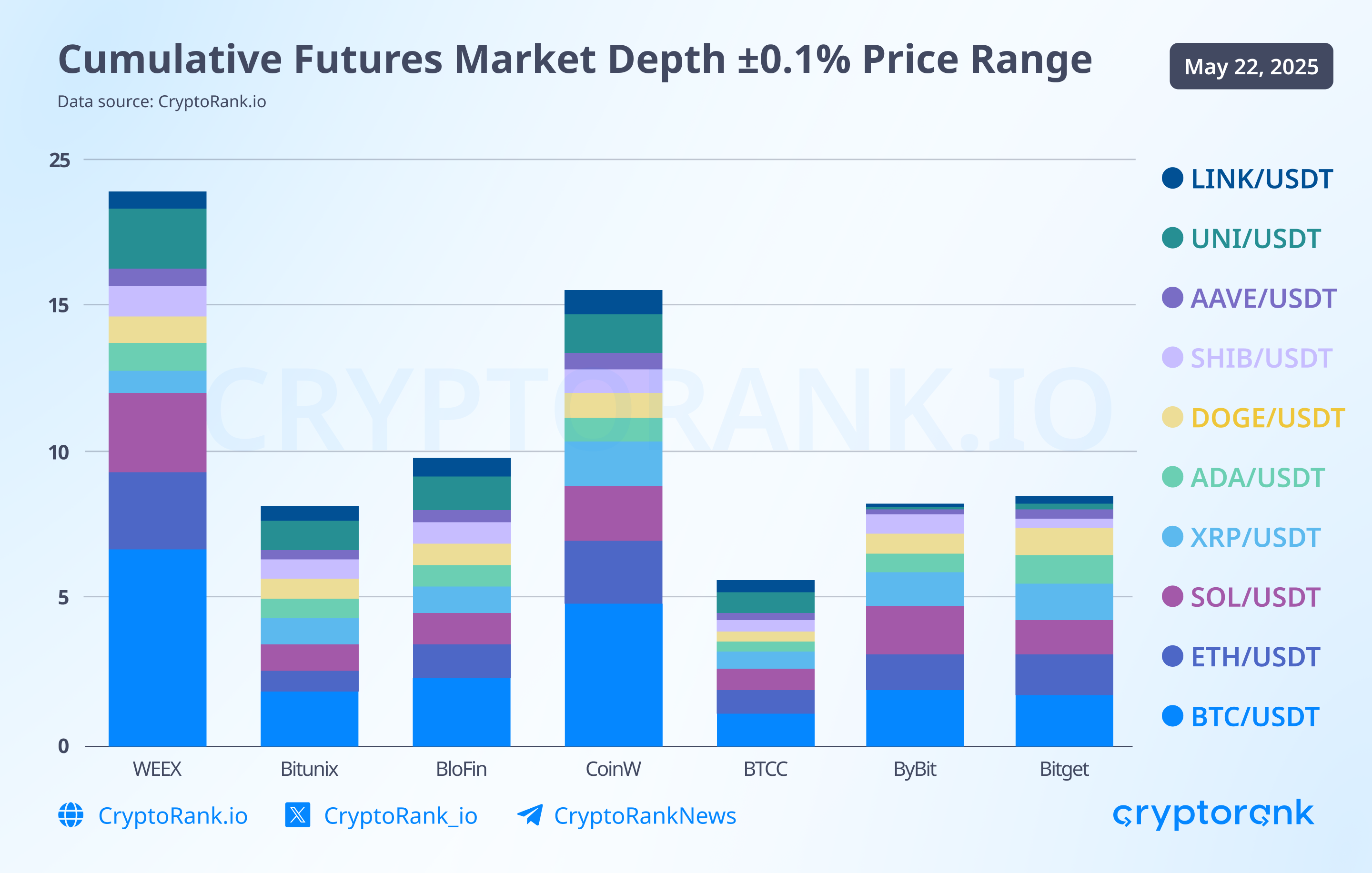
WEEX shows strong immediate liquidity on major trading pairs. For the BTC/USDT pair, WEEX offers the highest among all analyzed exchanges at the top of the book, surpassing both institutional platforms like Bitget and Bybit. Similar trends are observed for ETH/USDT and SOL/USDT well above top-of-book levels at competitors such as Bitunix, BloFin, and BTCC.
Bitget and Bybit show relatively low top-of-book volume, These platforms maintain a dense layer of small, rapidly replenished limit orders close to the mid-price. While this enables high-frequency trading and nearly instant execution for small orders, it means actual top-of-book depth appears limited in snapshots, even though liquidity increases significantly at slightly deeper levels such as within 0.1% of the mid-price. At these depths, WEEX and other mid-tier exchanges currently cannot compete with the scale and algorithmic liquidity density of Bybit and Bitget.
Liquidity on futures for pairs like SOL/USDT, ETH/USDT, and DOGE/USDT is sufficient for moderate volume trading. Notably, spreads on WEEX remain exceptionally low (0.00–0.01%), even on mid- and low-cap contracts, offering reliable execution conditions.
While it does not yet match the institutional-level liquidity of Bybit or Bitget on core futures pairs, WEEX remains highly competitive in spread efficiency and continues to build market depth. For traders focused on variety, early access, and efficient execution in liquid majors, WEEX represents a uniquely positioned alternative in the current exchange landscape.
Security and Transparency
WEEX maintains a strict 1:1 reserve ratio, ensuring that all user assets are fully backed. The platform provides a Proof of Reserves system, allowing users to verify that their holdings are matched by equivalent reserves. This system enhances trust and transparency by demonstrating the platform’s solvency.
To safeguard user assets, WEEX has established a 1,000 BTC Protection Fund, serving as an emergency reserve to cover potential losses. The platform employs advanced security measures, including two-factor authentication (2FA), cold storage solutions, and regular security audits. WEEX has also undergone independent security assessments, affirming its commitment to maintaining high-security standards.
Conclusion
WEEX presents itself as a fast-evolving exchange with a strong balance between innovation, asset diversity, and user-focused infrastructure. WEEX demonstrates strengths that position it as a compelling alternative for retail and mid-size traders.
WEEX doesn’t yet match the institutional-grade depth and volume of the largest exchanges, but it competes effectively in fee efficiency, asset breadth, and execution quality on major pairs. Its aggressive listing approach and focus on emerging sectors give it an edge for users seeking fast access to new market opportunities.
For retail traders, WEEX offers an appealing mix of low fees, wide asset selection, and solid execution on leading pairs. Its support for long-tail tokens and early-stage projects makes it especially attractive to users following trends and new narratives in crypto.
In summary, WEEX is a well-rounded exchange for users who prioritize early access, cost efficiency, and diverse exposure, while accepting the trade-offs of moderate depth in less mainstream markets.
Disclaimer: This post was independently created by the author(s) for general informational purposes and does not necessarily reflect the views of ChainRank Analytics OÜ. The author(s) may hold cryptocurrencies mentioned in this report. This post is not investment advice. Conduct your own research and consult an independent financial, tax, or legal advisor before making any investment decisions. The information here does not constitute an offer or solicitation to buy or sell any financial instrument or participate in any trading strategy. Past performance is no guarantee of future results. Without the prior written consent of CryptoRank, no part of this report may be copied, photocopied, reproduced or redistributed in any form or by any means.
Table of Contents
- Introduction
- Markets Analysis
- Liquidity Depth and Slippage Analysis on Futures Markets
- Number of Listed Assets and Presence of Long-tail or Early-listed Tokens.
- Comparison with Other Exchanges
- Security and Transparency
- Conclusion
Activity on Solana is Fading. Will it Reach New ATH?
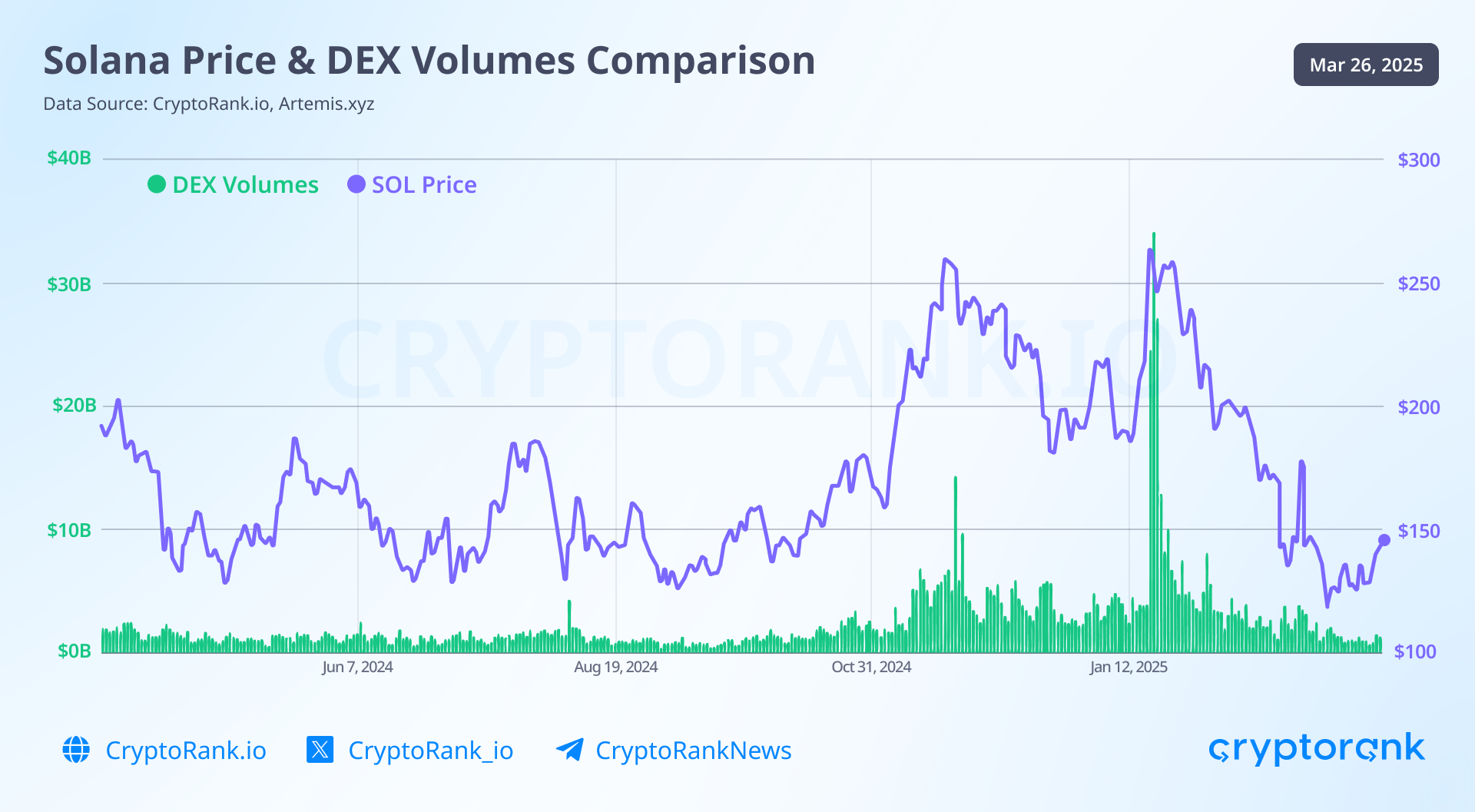
This pullback has hit Solana hard. Most on-chain metrics have declined, which put a lot of pressure on SOL price. Since its local top in early 2025, the token has fallen nearly 50% and returned to levels last seen in fall 2024.
The primary catalyst behind this drawdown is a sharp drop in DEX volume. Trading activity has fallen to its lowest since October 2024. Pump.fun shows similar trend, where the number of daily token launches has more than halved since the January peak.
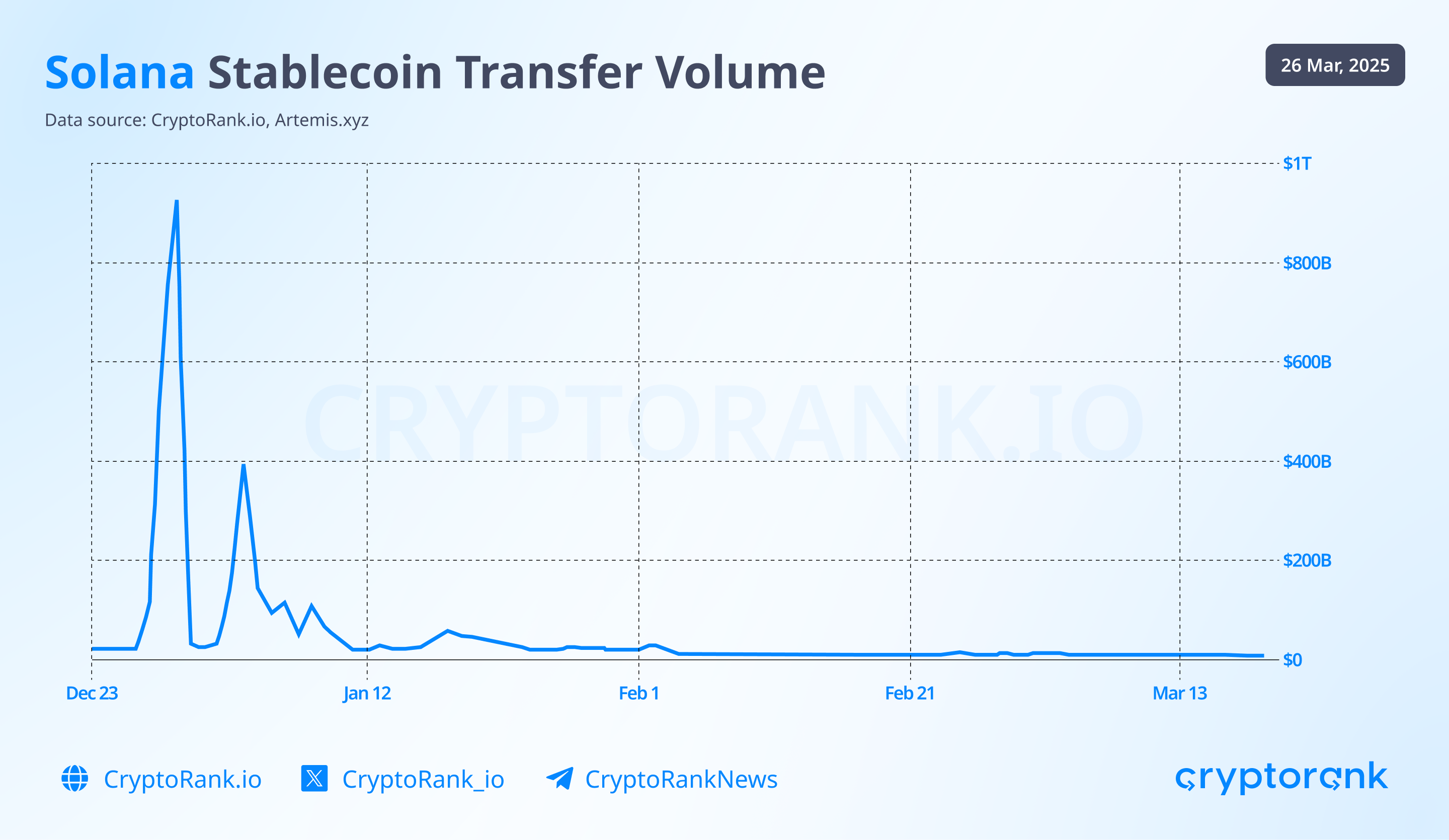
One of the clearest signs of slowing activity is the collapse in stablecoin transfer volume. Daily stablecoin transfers are now hovering around $5 billion—down from over $20 billion per day just a few months ago. This suggests that profit-taking has slowed sharply as trading opportunities dried up.
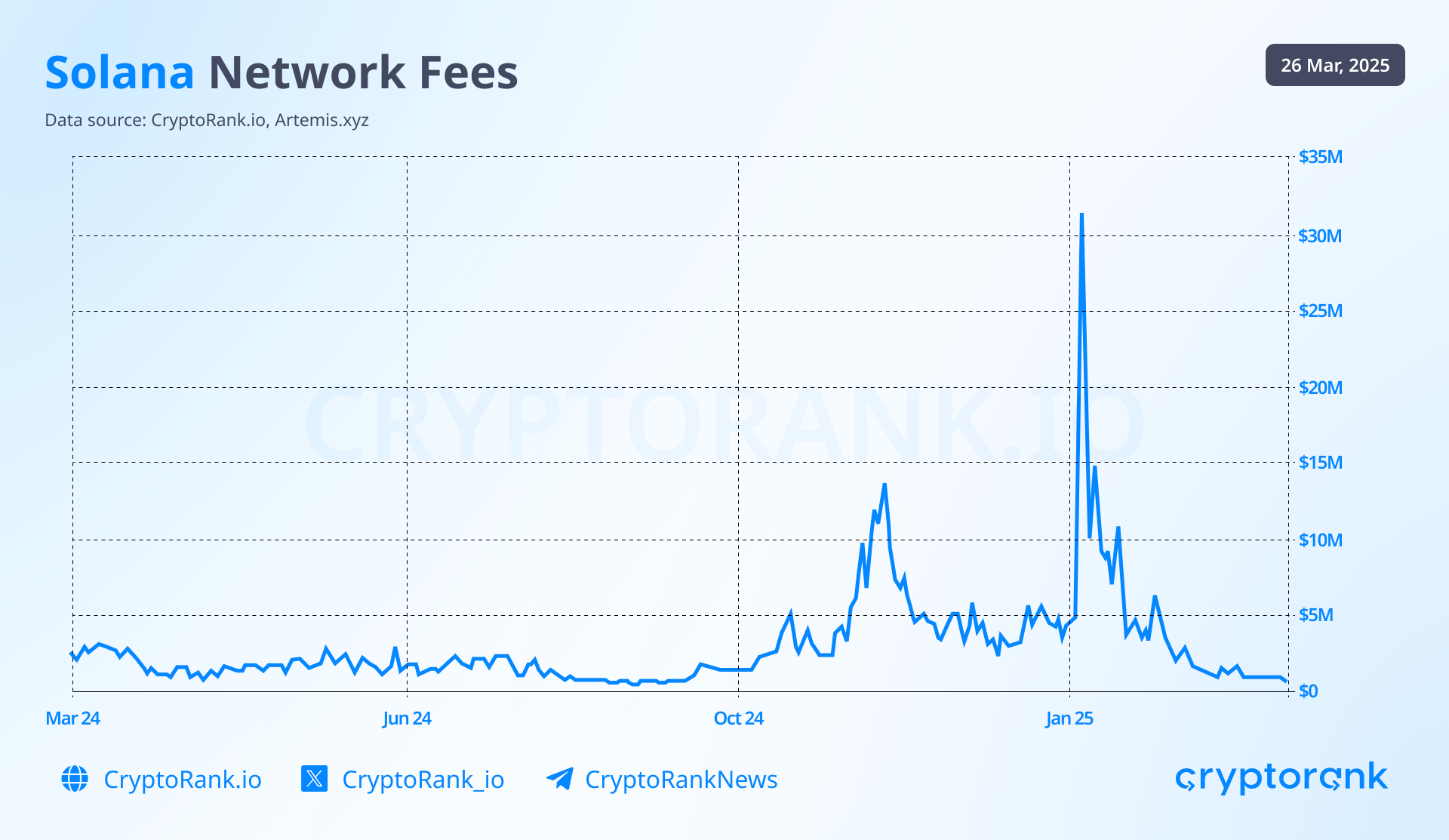
Another key metric under pressure is network fees. Transaction fees on Solana has dropped to a six-month low. This is the result of two factors: reduced network activity and a falling SOL price.
Persistently low fees create headwinds for SOL. Solana burns 50% of all transaction fees, which is a deflationary mechanism tied directly to the network usage. When fees are down, the rate of supply reduction slows as well. Amid continuous SOL vesting for FTX and Alameda, this may cause the price to slowly go down.
Given the negative momentum, the obvious question emerges—can SOL still break through $300? The answer depends on the market demand for token, which could come from several directions:
-
On-chain activity. Increased usage leads to higher fee burn, supporting price through reduced supply.
-
Solana ETF launch. The anticipated arrival of a Solana ETF could bring in new institutional capital.
-
Institutional or government adoption. Just as Donald Trump ran his memecoin on Solana, other applications can be run on it as well. Solana is leading not only in memecoins, but also in DePIN and AI.
Among these, on-chain activity is the strongest and most price-relevant driver. But it’s also the least predictable. A similar dip to what is happening now occurred in August 2024, when memecoin trading slowed sharply. Many assumed the cycle had peaked. But by fall, a stronger wave arrived. That pattern could repeat if April or May delivers a catalyst.
The ETF narrative appears likely to play out this year. On Polymarket, odds of a Solana ETF launching in 2025 sit at 89%. But the price may have already priced in that expectation.
Institutional and government adoption is a powerful long-term catalyst, comparable to Bitcoin’s accumulation narrative. Still, there are no meaningful signs of growth on that front yet. It’s something to watch, but not a short-term driver.
Most major investors and funds remain bullish on Solana. But many of those calls were made at the market top, when Trump’s memecoin pulled massive volumes into the ecosystem and sent SOL surging.
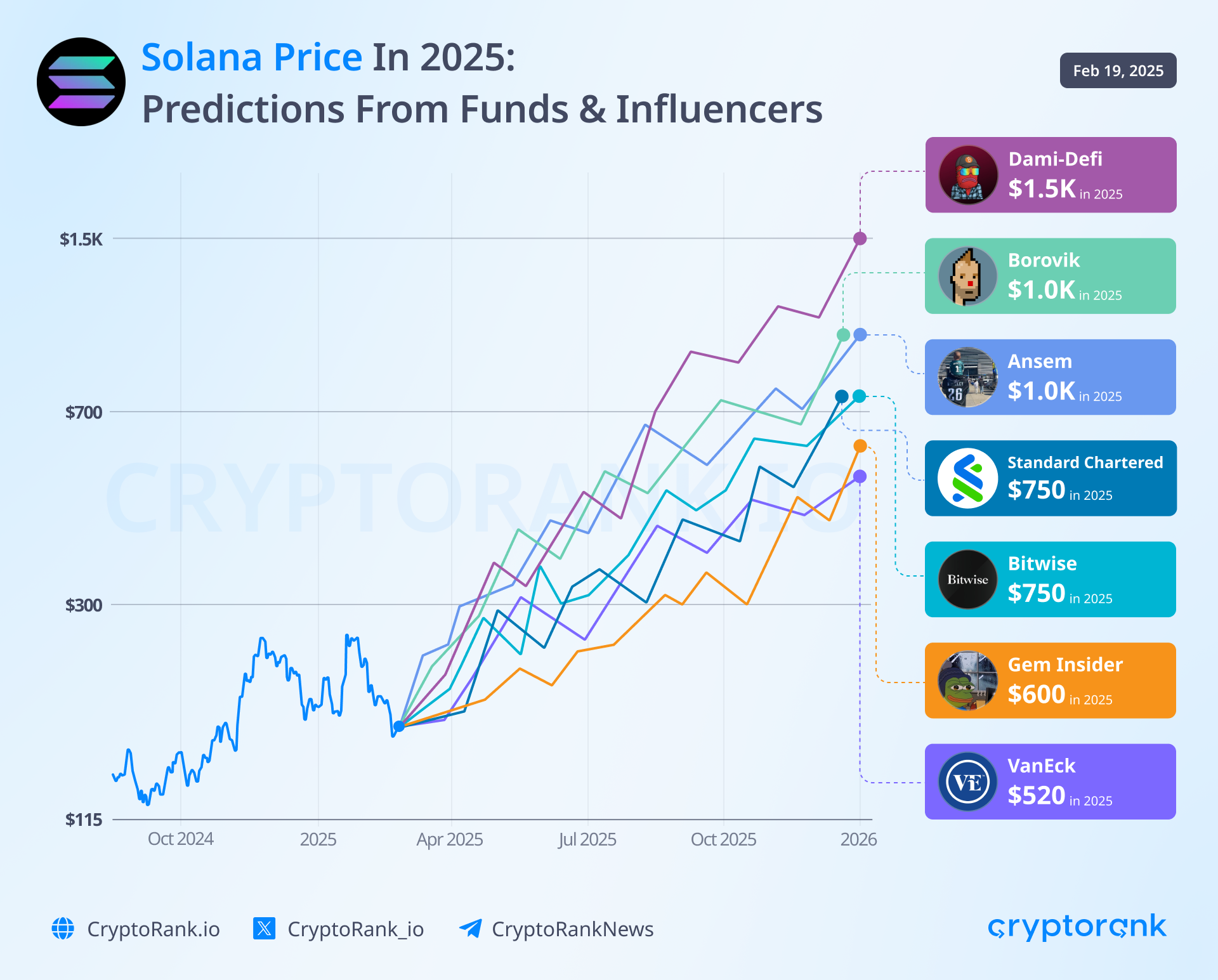
However, the current situation looks different. A move to $300 remains possible, but it’s a long-term projection. At the moment, there are no strong signals of a memecoin trading revival, aside from the broader hope for a shift in US monetary policy.
Even so, the Solana ecosystem is positioned well for the next wave. Liquidity remains strong, with over $12 billion in stablecoins on-chain. And beyond memecoins, the network is evolving into a home for real-world applications. These fundamentals create a supportive environment for SOL in the long run.



Kosta has reported on cryptocurrency markets and blockchain infrastructure since 2020, bringing over six years of hands-on experience in the crypto industry built through daily tracking of markets, trends, and emerging blockchain developments. Specializing in Bitcoin on-chain analysis, institutional ETF flows, and digital asset price action, his work at Coindoo has been cited by other news agencies and consistently covers market developments with a focus on data-driven reporting across Bitcoin, Ethereum, Solana, and XRP. Over the years, Kosta has contributed to multiple crypto media outlets in different regions, authoring over 6,000 articles across the sector. His reporting spans cryptocurrency markets and the broader fintech industry, tracking not only price action but also the technological and regulatory forces shaping the ecosystem. To support his analysis, Kosta actively leverages on-chain data and metrics from leading platforms such as Santiment, Glassnode, and CryptoQuant, enabling deeper, evidence-based market insights. He believes in the power of transparency and the data that underpins the blockchain ecosystem. His academic background in Marketing Management from Denmark further complements his analytical approach, adding a strong understanding of communication strategy and content positioning to his work.