Top Crypto Faucets in 2026

Crypto faucets are platforms that distribute small amounts of cryptocurrency as rewards for completing simple tasks, such as solving CAPTCHAs, playing games, or referring new users. Businesses use these faucets to promote initial coin offerings (ICOs) and encourage crypto adoption.
Key Takeaways
- The five crypto faucets in this guide had active official websites and published withdrawal rules when checked on July 24, 2026.
- Most platforms first credit users with internal points that are converted into cryptocurrency at withdrawal.
- Withdrawal minimums range from a few cents to around $25, depending on the platform, asset and network.
- Faucet rewards vary by location, task availability and time spent, so none can be called the highest-paying without controlled testing.
- Testnet faucets such as the Arbitrum Sepolia faucet distribute development tokens, not cryptocurrency with market value.
Crypto faucets still exist in 2026, but the experience is different from the early Bitcoin faucets that distributed coins for little more than entering a wallet address.
Most current platforms combine a faucet with surveys, advertisements, offerwalls or other small tasks. Instead of sending cryptocurrency after every action, they usually credit an internal balance and allow users to withdraw once they reach a minimum.
The rewards are generally small, and the time needed to reach the withdrawal threshold can vary considerably. A platform may have many tasks available in one country and very few in another. Advertisers can also reject or reverse a task if their requirements are not met.
This guide focuses on five faucet platforms that were accessible and publishing current withdrawal information in July 2026. It does not include platforms whose main service is something other than a faucet.
How this guide was prepared: Each platform was checked through its official website, help center or terms. The comparison covers publicly documented payout assets, minimum withdrawals, fees and processing rules. Coindoo did not create accounts or complete test withdrawals for this update, so the platforms are listed alphabetically rather than ranked by earnings.
Link disclosure: The external platform links in this version point to official websites and do not contain referral codes.
Table of Contents
How Crypto Faucets Work in 2026
A crypto faucet distributes small cryptocurrency rewards after a user completes an action. Depending on the platform, that may involve claiming a timed faucet, viewing an advertisement, answering a survey or completing an offer.
The process usually has four stages:
- The user completes a faucet claim or task.
- The platform credits an internal point or dollar-based balance.
- The balance accumulates until it reaches the withdrawal minimum.
- The platform converts the balance into the selected cryptocurrency and sends it to a wallet or microwallet.
This design allows platforms to combine many small rewards before paying blockchain transaction fees. It also means that the number shown inside a faucet account may not represent cryptocurrency already held onchain.
For example, Cointiply uses an internal balance called Coins, while FireFaucet uses Auto Claim Points and Final Autoclaim uses DUTCHY. These balances are platform units that can later be converted into supported cryptocurrencies.
Crypto faucets are only one of several ways people attempt to receive digital assets without purchasing them directly. Our wider guide to ways to earn cryptocurrency explains how faucets differ from other reward models.
Five Active Crypto Faucets Compared
| Platform | Reward System | Published Minimum | Withdrawal Method | Published Fee | Main Limitation |
|---|---|---|---|---|---|
| Cointiply | Coins converted into BTC, DOGE, Dash or LTC | $3 for DOGE, Dash and LTC; $5 for BTC | Direct crypto withdrawal | Cointiply says it covers blockchain fees | Most withdrawals take 24–72 hours to process |
| FaucetCrypto | Coins converted into the selected cryptocurrency | 1,000 Coins, or about $0.04, for most assets | Direct blockchain withdrawal | 50 Coins, or about $0.002, for most assets | Some networks have higher minimums and fees |
| Final Autoclaim | DUTCHY converted through an automatic faucet | $0.05 through FaucetPay; usually $0.05–$5 for direct withdrawals | FaucetPay or direct blockchain withdrawal | FaucetPay withdrawals are advertised without a withdrawal fee | The claim page must remain open while the automatic faucet runs |
| FireFaucet | ACP converted into one or more supported cryptocurrencies | Generally about $2.50–$25, depending on the asset and network | FaucetPay or direct crypto withdrawal | FireFaucet says it covers network and processing fees | Daily withdrawal limits and network-specific minimums apply |
| StakeCube | Premium and community-funded faucet claims | No universal minimum is published for faucet claims | Rewards are credited to a StakeCube account | Depends on the asset and current wallet rules | Faucets may be empty, and claim amounts can change |
The figures above describe withdrawal conditions, not expected earnings. A low minimum does not necessarily mean a user will reach it quickly.
Cointiply
Cointiply combines free faucet-style rewards with surveys, advertisements and other tasks. Users receive an internal balance called Coins rather than cryptocurrency immediately after each completed activity.
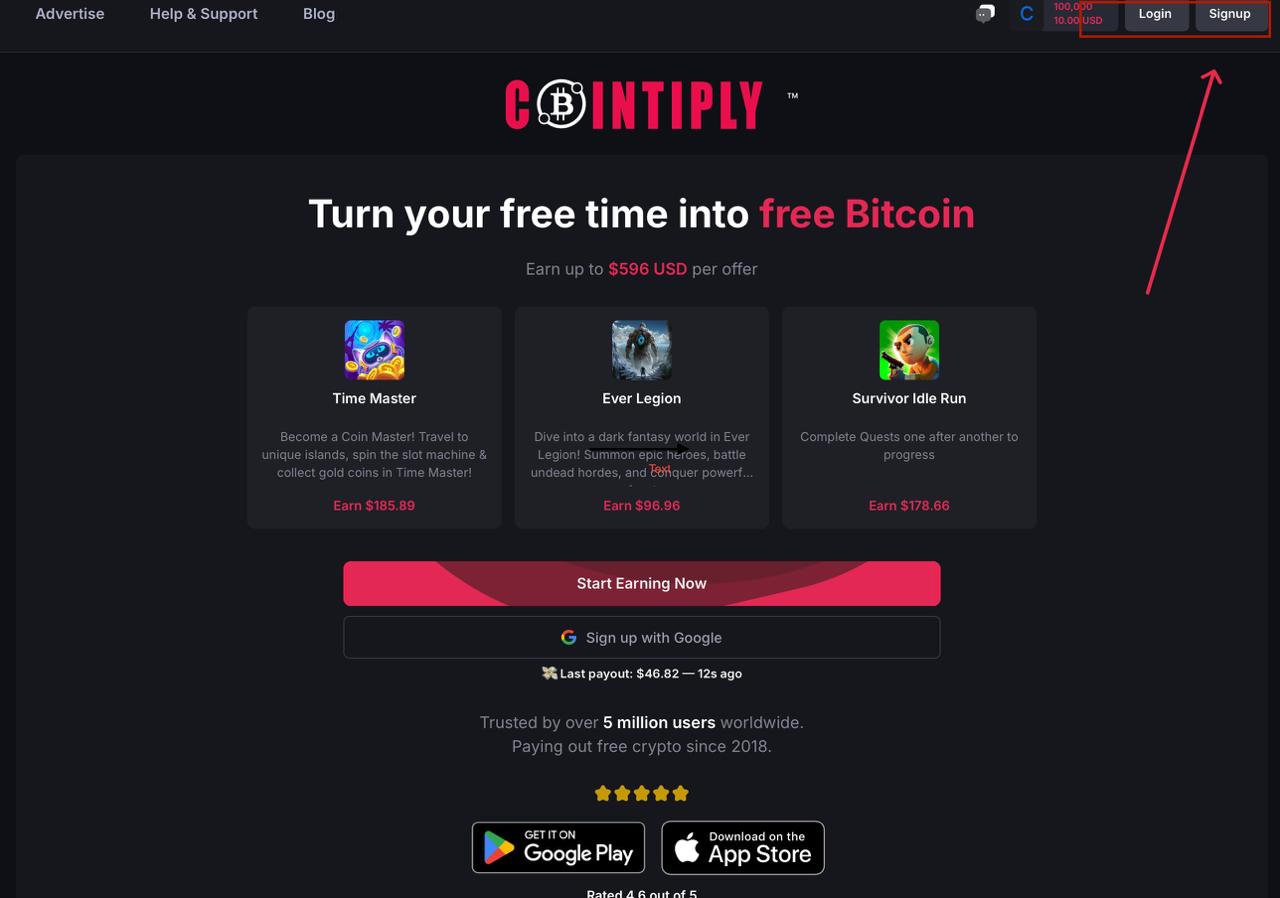
Cointiply fixes the value of that balance at 10,000 Coins per $1. When a withdrawal is processed, the dollar value is converted into the selected cryptocurrency at the current market rate.
The platform currently documents four withdrawal assets:
- Bitcoin
- Dogecoin
- Dash
- Litecoin
The official Cointiply withdrawal guide sets the minimum at 30,000 Coins, or $3, for Dogecoin, Dash and Litecoin. Bitcoin withdrawals require 50,000 Coins, equal to $5.
Cointiply says it does not charge a withdrawal fee because the platform currently covers the blockchain transaction cost. A receiving wallet or exchange may still impose its own minimum-deposit rules.
Most withdrawals are processed within 24 to 72 hours. Delivery can take longer after the transaction is sent if the selected blockchain is congested.
Main point to consider: Cointiply’s thresholds are easy to understand because the internal balance has a fixed dollar value. The unknown is how quickly an individual user can earn enough Coins, since task access and rewards vary.
Cointiply Key Features:
- Play games;
- Complete tasks;
- Complete quick offers;
- Complete surveys;
- Watch videos.
Pros:
- Bright customer support;
- Transparent payment methods;
- The opportunity to earn different free crypto.
Cons:
- There are only four currencies available: Bitcoin (BTC), Litecoin (LTC), Dogecoin (DOGE), and Dash (DASH);
- The rewards are rather low.
FaucetCrypto
FaucetCrypto uses an internal unit called Coins, with 25,000 Coins equal to $1. Users accumulate Coins and select the cryptocurrency and network they want when requesting a withdrawal.

The platform’s official withdrawal documentation sets the minimum at 1,000 Coins, or approximately $0.04, for most supported assets.
Some cryptocurrencies and networks require a higher balance. FaucetCrypto specifically notes that Bitcoin, Tron and Polygon are among the assets that may have different requirements.
The standard withdrawal fee is 50 Coins, equivalent to about $0.002, for most assets. Higher fees can apply to networks where sending a transaction costs more. The exact minimum, fee and estimated amount received are shown before the user submits the request.
Withdrawals are sent directly through the blockchain to the address provided by the user. Once completed, FaucetCrypto provides a transaction hash that can be checked through a block explorer.
The platform recommends sending rewards to a wallet that accepts small deposits and warns users to confirm that the address matches the selected network.
Main point to consider: FaucetCrypto has a low published minimum for many assets, but the correct network must be selected. Sending to an incompatible address can result in an irreversible loss.
Final Autoclaim
Final Autoclaim is an automatic multi-coin faucet. Users earn an internal balance called DUTCHY and spend it through the faucet to accumulate selected cryptocurrencies.
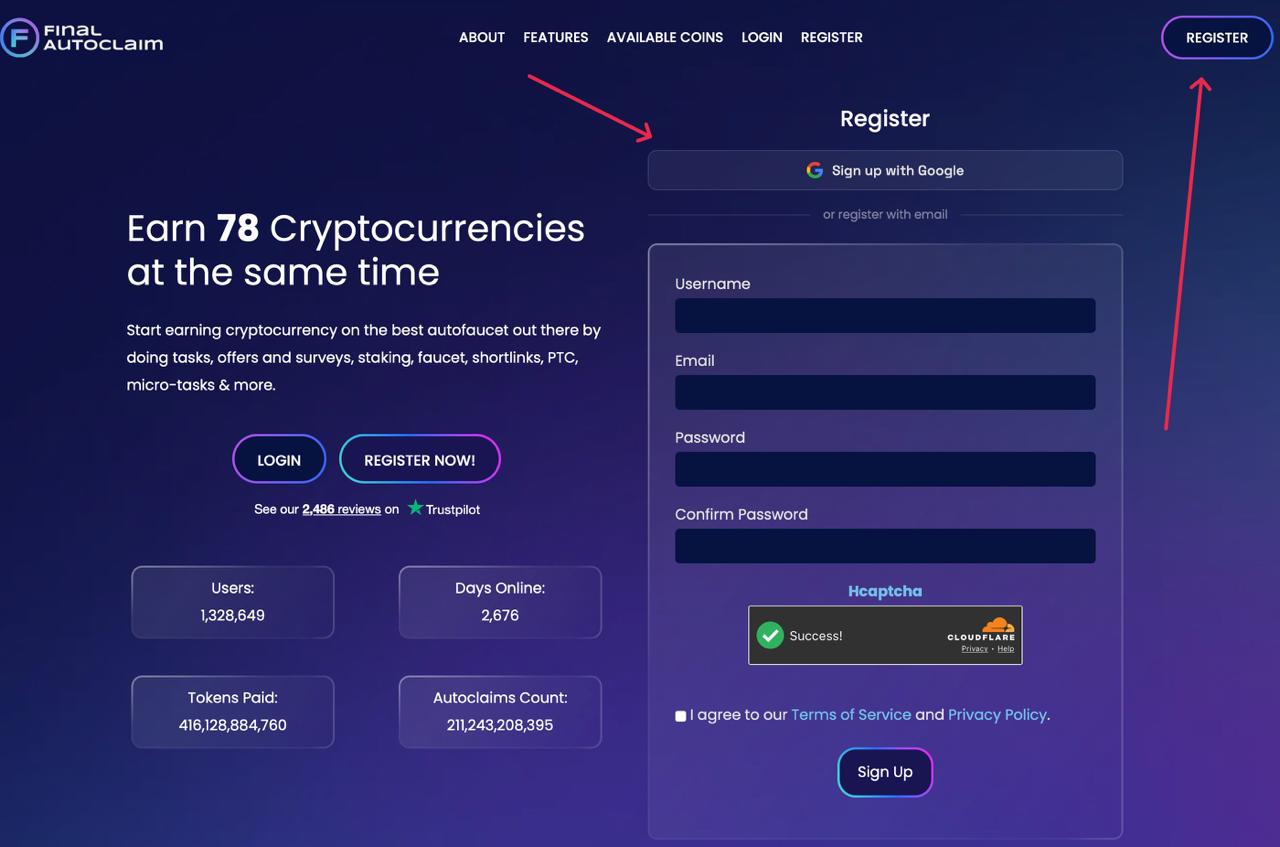
According to the platform’s official FAQ, the automatic claim page supports up to 78 cryptocurrencies. The number of selected assets affects how much DUTCHY is consumed during each claim cycle.
Final Autoclaim supports two main withdrawal routes:
- FaucetPay: The published minimum is fixed at $0.05. Payment depends on the platform having enough of the selected asset available.
- Direct blockchain withdrawal: The minimum depends on the cryptocurrency and is usually between $0.05 and $5.
The platform says FaucetPay withdrawals are sent immediately when its corresponding balance is funded. Direct payments must wait for confirmation on the selected blockchain.
The claim page has to remain open for the automatic process to continue. It can remain in the background while the user visits another tab, but closing the claim page stops the process.
Final Autoclaim also prohibits multiple accounts, bots, VPNs, proxies and other methods that could be used to automate or duplicate claims.
Main point to consider: The large asset selection gives users more choice, but minimums and platform balances differ between coins. The withdrawal page should be checked before converting DUTCHY into a particular asset.
FireFaucet
If you’re looking for an auto faucet, Fire Faucet could be one of the top crypto faucets available on the market, as it also integrates an automatic payment system.
FireFaucet uses Auto Claim Points, or ACP, as its internal reward balance. The Auto Faucet converts ACP into the cryptocurrencies selected by the user.
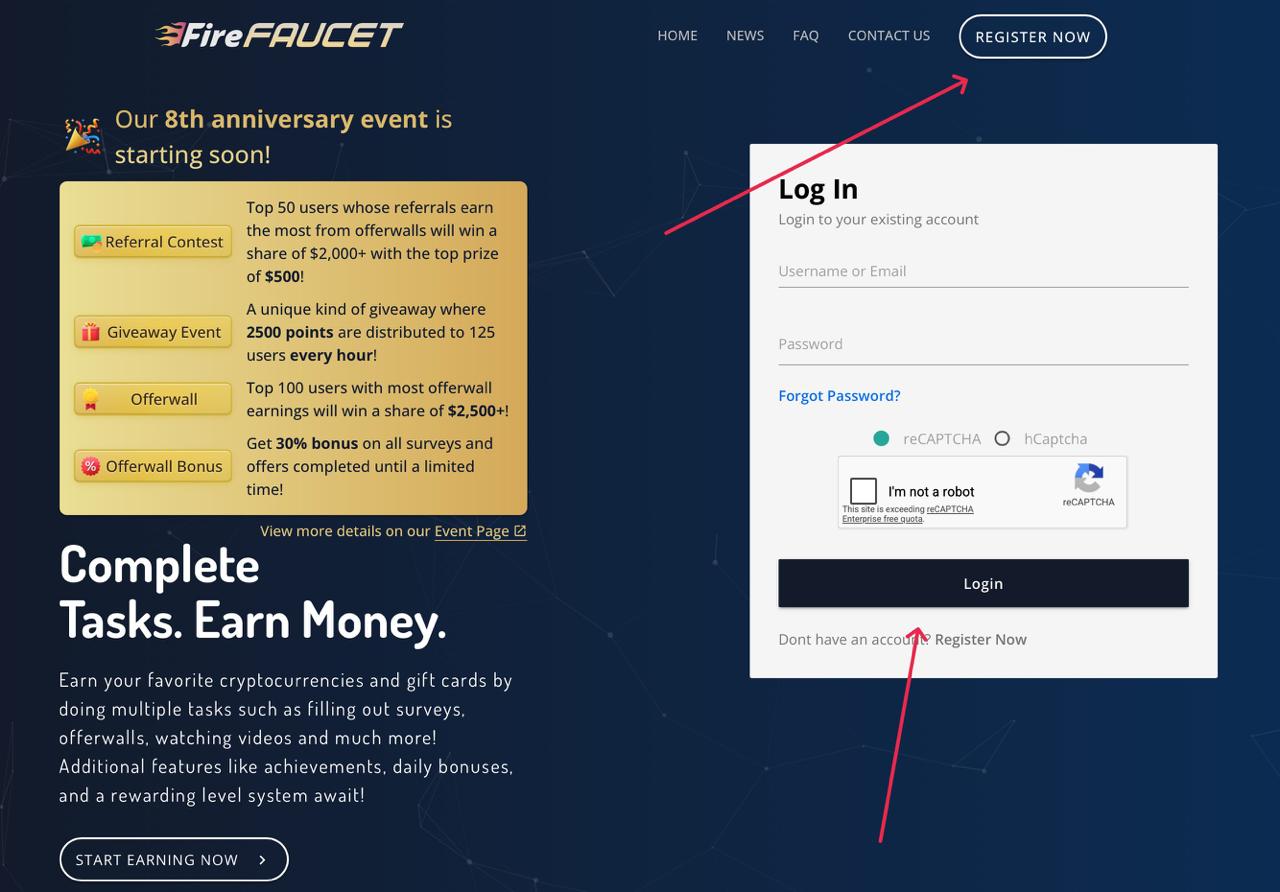
From solving CAPTHAs, completing surveys, offerwalls, watching videos, and others, Fire Faucet is a multi-coin faucet that supports 13 currencies, allows direct payments to your wallet, and comes with many distinctive features, such as unlocking achievements, daily bonuses, and a rewarding level system.
As it is considered one of the highest-paying crypto faucets, Fire Faucet brings the referral program up a notch by offering you commissions. Thus, it seems to be a reliable Bitcoin faucet for sustainable earnings.
Fire Faucet Key Features:
- High reward rates;
- Daily ranking;
- Reward level system;
- Daily achievements.
Pros: It supports 15 cryptocurrencies:
- Bitcoin
- BNB on BNB Smart Chain
- USDT on Tron
- Cardano
- Ethereum
- Dogecoin
- Litecoin
- Dash
- Tron
- Nano
- Monero
- Zcash
- DigiByte
- Solana
- USD Coin
Cons:
The tasks could be more substantial, offering a higher reward.
FireFaucet’s official help center says withdrawal minimums generally range from about $2.50 to $25. Each cryptocurrency may support different networks, and every network can have a separate minimum.
StakeCube Community Faucets
StakeCube’s faucet page uses a different model from the task-based platforms above.
It contains premium faucets supported by coin teams and community faucets funded through donations.
Probably one of the most widely used crypto faucets, Stakecube brings into the spotlight two types of earning rewards: one through the community crypto faucets, which are donations but act as free faucets for users to claim, and the second one is the premium faucet. The premium crypto faucets are paid rewards offered upon completing different tasks.
One exciting aspect is the fact that, despite other crypto faucets mentioned, Stakecube updates its portfolio daily. Thus, new crypto faucets await you every time you log into your account.
Stakecube Key Features:
Pros:
- Enjoy an extensive coin portfolio;
- Claim every 24 hours;
Cons:
- There can be delays when exchanging the claims.
Main point to consider: StakeCube can provide direct coin claims without completing surveys, but availability depends on donations and project funding. It should not be treated as a predictable daily reward.
Arbitrum Sepolia Faucet: Test Tokens, Not Free Money
Not every crypto faucet is designed to provide cryptocurrency with market value.
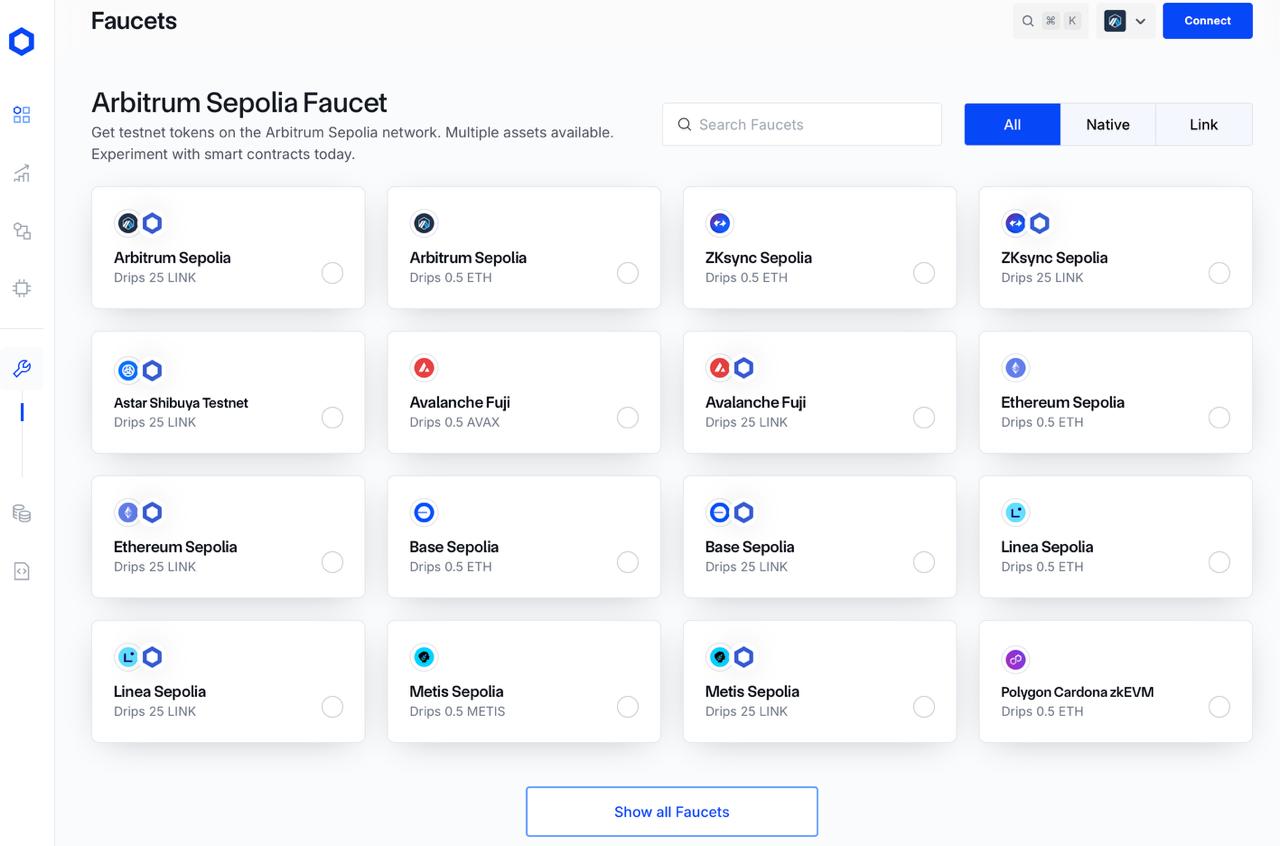
The official Chainlink Arbitrum Sepolia faucet distributes test ETH and LINK for use on the Arbitrum Sepolia test network. Developers use these tokens to deploy smart contracts, test transactions and experiment with applications without spending real assets.
Arbitrum Sepolia tokens are separate from ETH and LINK on mainnet. They are intended for testing and should not be presented as an earning opportunity.
Users connect a compatible wallet, select the required test token and submit a request. Faucet conditions and available amounts can change, so the current interface should be checked before relying on a specific allocation.
Moving real cryptocurrency onto Arbitrum is a different process that requires a bridge rather than a faucet. Our guide to the official Arbitrum Bridge and its alternatives explains how mainnet assets are transferred between Ethereum and Arbitrum.
How to Calculate What a Faucet Really Pays
A withdrawal minimum alone does not show whether a faucet is worth the time required to reach it.
Two users can receive different results from the same platform because survey inventory, advertiser demand and task eligibility depend on factors such as location, language and account profile.
The most useful measurement is the amount actually received after fees compared with the active time spent earning it:
Net hourly return = Amount received after fees ÷ Active minutes × 60
For example, suppose a user spends 120 active minutes and eventually receives $0.50 after the withdrawal fee:
$0.50 ÷ 120 × 60 = $0.25 per hour
This is only an example of the calculation. It is not an earnings estimate for any platform in this guide.
To measure a faucet fairly:
- Record the time spent actively completing claims and tasks.
- Exclude referral bonuses and paid account upgrades.
- Track rejected or reversed tasks.
- Complete the smallest available withdrawal.
- Subtract any platform or network fee.
- Calculate the return using the amount that reached the wallet.
A platform should not be described as the “highest-paying faucet” without this type of controlled comparison.
How to Use Crypto Faucets More Safely
Faucets deal in small rewards, but using one can still expose an email address, device, wallet address or other personal information to the platform and its advertising partners.
- Never provide a seed phrase or private key. A faucet needs a public receiving address to send cryptocurrency. It does not need permission to control the wallet.
- Check the network before withdrawing. An Ethereum address may look similar across several networks, but the receiving wallet must support the network selected by the faucet.
- Use a separate email address. This limits the effect of promotional emails or a data leak involving a reward platform.
- Avoid unknown files and unnecessary permissions. Do not install an application from an unverified source or allow access unrelated to the advertised task.
- Do not pay to unlock a withdrawal. A demand for an additional deposit before a reward can be released is a serious warning sign.
- Test the smallest withdrawal first. Confirm that the platform can send funds to the chosen wallet before spending more time accumulating rewards.
- Save records. Keep screenshots of task terms, completed offers, balances and withdrawal requests in case a reward is disputed.
The guide we made for finding and using a cryptocurrency wallet address explains why the correct asset and network must be selected before requesting a payment.
For broader protection advice, see our guide to recognizing and avoiding crypto scams.
Are Crypto Faucet Rewards Taxable?
Tax treatment depends on the user’s country, the type of activity completed and how the reward is classified under local law.
In the United States, the Internal Revenue Service states that digital assets received in exchange for performing services are ordinary income. The amount is measured using the fair market value in US dollars when the assets are received.
A later sale, exchange or use of the cryptocurrency may create a separate gain or loss based on the difference between its value when received and its value when disposed of.
Users should keep records showing:
- The cryptocurrency and amount received
- The date and time of receipt
- The fair market value when received
- Any withdrawal fee
- The wallet transaction ID
Rules outside the United States may differ. Users should check the tax rules that apply in their own jurisdiction rather than assuming small faucet rewards are exempt.
Are Crypto Faucets Legal?
There is no single global rule covering every faucet. Availability, tax treatment, advertising rules and eligibility requirements vary by country.
Each platform can also impose its own restrictions on age, location, VPN use, multiple accounts and automated activity. Violating those terms can result in rejected rewards or account closure.
Users should read the current platform terms and check the rules that apply where they live before registering.
Frequently Asked Questions
Which crypto faucet pays the most in 2026?
There is not enough verified evidence to name one platform as the highest-paying. Earnings depend on location, available tasks, account level and the amount of active time spent. A fair answer would require the same person to test every platform under identical conditions and complete a withdrawal from each one.
Can crypto faucets provide a regular income?
Faucets are designed around small rewards and should not be treated as a dependable income source. Task inventory and payout rates can change, and a user may not qualify for every available offer.
Do crypto faucets send rewards directly to a wallet?
Some do. Cointiply and FaucetCrypto document direct crypto withdrawals, while Final Autoclaim and FireFaucet support both direct withdrawals and FaucetPay. StakeCube first credits faucet claims to the user’s platform account.
Why do faucets use internal points?
Internal points allow a platform to record very small rewards without creating a blockchain transaction after every claim. The points are converted into cryptocurrency when the user requests a withdrawal.
Do users need to pay before using a faucet?
The faucets listed in this guide provide a free way to begin earning rewards, although optional paid features may exist. A user should not be required to send cryptocurrency to unlock an ordinary faucet withdrawal.
Are Arbitrum faucet tokens worth money?
Tokens received from an Arbitrum Sepolia testnet faucet are intended for development and testing. They are not the same as assets on Arbitrum One or Ethereum mainnet and should not be treated as an investment or source of income.
What happens if a faucet sends crypto through the wrong network?
The receiving wallet may not display or support the asset, and recovery may be difficult or impossible. The wallet address, asset and blockchain network should all be checked before a withdrawal is confirmed.
Methodology
This guide was reviewed on July 24, 2026 using the official websites, help centers and terms published by each platform.
A platform was included only when:
- Its official website was accessible.
- It still described itself as offering faucet claims or faucet-based cryptocurrency rewards.
- Official withdrawal or account information was available.
- Its main service matched the subject of this article.
The guide does not claim first-hand experience with the platforms. No new accounts were created, no timed earning tests were conducted and no withdrawals were requested as part of this update. For that reason, the article compares documented features and conditions rather than ranking platforms by profitability or reliability.
Faucet rules, supported assets and withdrawal limits can change. Users should confirm the information on the official platform before completing tasks or requesting a payment.
This article is for informational purposes only and does not endorse any faucet listed. Before using a crypto faucet, review its official terms, withdrawal rules, supported networks and privacy policy, and check recent independent user feedback to confirm that it is still active and processing payments. Test the smallest available withdrawal first, never share a seed phrase or private key, and avoid any platform that asks for a deposit or payment to release faucet rewards.



Kosta has reported on cryptocurrency markets and blockchain infrastructure since 2020, bringing over six years of hands-on experience in the crypto industry built through daily tracking of markets, trends, and emerging blockchain developments. Specializing in Bitcoin on-chain analysis, institutional ETF flows, and digital asset price action, his work at Coindoo has been cited by other news agencies and consistently covers market developments with a focus on data-driven reporting across Bitcoin, Ethereum, Solana, and XRP. Over the years, Kosta has contributed to multiple crypto media outlets in different regions, authoring over 6,000 articles across the sector. His reporting spans cryptocurrency markets and the broader fintech industry, tracking not only price action but also the technological and regulatory forces shaping the ecosystem. To support his analysis, Kosta actively leverages on-chain data and metrics from leading platforms such as Santiment, Glassnode, and CryptoQuant, enabling deeper, evidence-based market insights. He believes in the power of transparency and the data that underpins the blockchain ecosystem. His academic background in Marketing Management from Denmark further complements his analytical approach, adding a strong understanding of communication strategy and content positioning to his work.